Joseph Stalin Quotes
Language is an instrument of development and struggle. Different nations have different languages. The interests of the proletariat of all Russia demand that the proletarians of the different nationalities inhabiting Russia shall have full right to use the language in which it is easiest for them to receive education, in which they can best oppose their enemies at meetings or in public, state and other institutions. That language is the native language.
Stalin was then only 26 years old. This was more than a decade BEFORE the Russian Revolution and Stalin was a young left wing revolutionary planning how to bring about a revolution and how the society should operate thereafter. He was then much the youthful, intellectual, Georgian idealist. The Russian upper class all spoke Russian and usually French and English as well. But the working class only spoke a single language—their native language which was for huge numbers of Russians, not Russian. It was Ukrainian, Georgian, and many others.
Joseph Stalin, 1879-1953, Russian Premier, “The Social-Democratic View on the National Question”, September 1, 1904
Sourced by: Eigen's Political and Historical Quotations

This referendum was passed by the voters as a backlash against the large influx of Hispanics and especially Cubans.


He was interviewed by PBS and asked why he introduced and financed California Proposition 227 the severely limited and curtailed bilingual education. Based on his success getting Proposition 227 passed in California, he tried to follow suit with Arizona Proposition 203, Colorado Amendment 31, and Massachusetts Question 2 which were not so successful. The research on Bilingual Education is mixed with some studies showing benefits and others not. Intuitively, the case against it was easier to sell as the objective was to develop English Proficiency and it was hard for many people to understand how that would better be accomplished if other classes were taught in a native language like Spanish. The other side point out that students who come the the United States very competent in Mathematics, Science and History get thrown into English speaking classes in those subjects and the fall behind very quickly. By the time their English is sufficient to take instruction in English, they have already failed the courses in which they used to be good and have to take them again if they are still in school which is rare since the lack of English skills causes them to fail all subjects if a Bilingual program is not available for their math, science, and history courses. Both sides of the argument have a point, but in many anti-Bilingual campaigns, the educational arguments gets lost and the issue becomes whether or not America should be an English speaking country, and Hispanic chauvinism and anti Hispanic racism end up driving much of the debate.
Explaining the English-only law of his Québec city:

The 1977 Quebec language law decreed that all immigrants be educated in French, that all businesses transact in French, that English-named towns, rivers, and mountains be Frenchified, and that all English (or even bilingual) commercial signs be outlawed. Other minorities could only transact business in French. After great protest and ridicule the Quebec Parliament amended the law to allow French signs to contain another language provided that the font of the other language was no bigger than half that of the French.


He was one of the authors of the Bi-Lingual Education Act, but the nature of the program changed much from the original intent.


The concern over Hispanic immigrants were at a high point and Latinos in America staged a national demonstrations and in many cases sang the National Anthem in Spanish. When she was told immediately after she expressed her view that her husband had said that our National Anthem was to be sung only in English, she then agreed that it should be sung in English. This quotation is used by some to illustrate that the First Lady had much more compassionate and tolerant views than her husband.


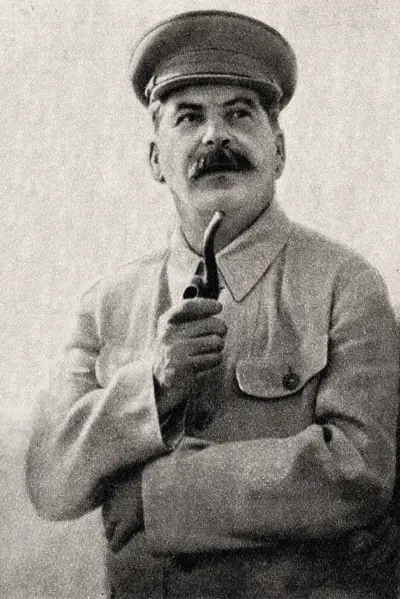
Joseph Vissarionovich Stalin was a Georgian revolutionary and the ruler of the Soviet Union from 1927 until 1953. He served as both General Secretary of the Communist Party of the Soviet Union (1922–1952) and Chairman of the Council of Ministers of the Soviet Union (1941–1953). Despite initially governing the country as part of a collective leadership, he ultimately consolidated power to become the Soviet Union's de facto dictator by the 1930s. A communist ideologically committed to the Leninist interpretation of Marxism, Stalin formalized these ideas as Marxism–Leninism while his own policies are known as Stalinism.
