Stephen the Great Quotes
Make the strangers welcome in this land, let them keep their languages and customs, for weak and fragile is the realm which is based on a single language or on a single set of customs
Stephen the Great, 969-1038 [St. Stephen], King of the Magyars in Hungary, Letter to his son St. Emeric, 1036
Sourced by: Eigen's Political and Historical Quotations


Penn observed the fact that most American social relationships are not multicultural in that Blacks in a restaurant tend to eat with other Blacks, whites and Hispanics the same. While America has a multicultural and diverse work environment and use of public services, it is still rare to see very integrated churches, social clubs, parties and other social activities. While Penn’s observation is correct, the trend is towards much more socialization on racial, religious, cultural, and geographical basis. There is much more intermarriage than in the past and with integrated families, many of the other social pluralism will follow. It was once thought that intermarriage would be the last barrier to fall and would follow from school, church, and other social integration. However, it appears that it is the other way around.


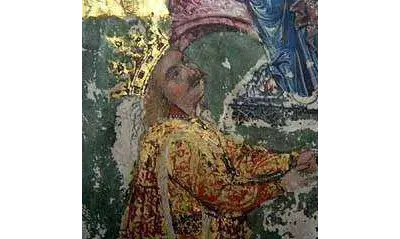
Stephen III of Moldavia, most commonly known as Stephen the Great, was Voivode (or Prince) of Moldavia from 1457 to 1504. He was the son of and co-ruler with Bogdan II, who was murdered in 1451 in a conspiracy organized by his brother and Stephen's uncle Peter III Aaron who took the throne. Stephen fled to Hungary, and later to Wallachia, but with the support of Vlad III Țepeș, Voivode of Wallachia, he returned to Moldavia, forcing Aaron to seek refuge in Poland in the summer of 1457. Teoctist I, Metropolitan of Moldavia, anointed Stephen prince. He attacked Poland and prevented Casimir IV Jagiellon, King of Poland, from supporting Peter Aaron, but eventually acknowledged Casimir's suzerainty in 1459.
