Ana Castillo Quotes
We will never have "a" Chicano English or Spanish because of regional differences. But I think that because of our bilingual history, we'll always be speaking a special kind of English and Spanish. What we do have to do is fight for the right to use those two languages in the way that it serves us.
Ana Castillo, 1953-1990 Poet, Novelist, & Essayist, Interview with Simon Romero, NuCity [Albuquerque], June/July 1993
Sourced by: Eigen's Political and Historical Quotations


Explaining the English-only law of his Québec city:


Kenya and a number of other countries of the world were made up of regions and tribes who spoke many languages, Kenya, India and many others chose English and most people speak their tribal or regional language and English. In some countries French was chosen. Typically, the language selected for unity was the language of the colonizers of the area.


Stalin was then only 26 years old. This was more than a decade BEFORE the Russian Revolution and Stalin was a young left wing revolutionary planning how to bring about a revolution and how the society should operate thereafter. He was then much the youthful, intellectual, Georgian idealist. The Russian upper class all spoke Russian and usually French and English as well. But the working class only spoke a single language—their native language which was for huge numbers of Russians, not Russian. It was Ukrainian, Georgian, and many others.


This referendum was passed by the voters as a backlash against the large influx of Hispanics and especially Cubans.

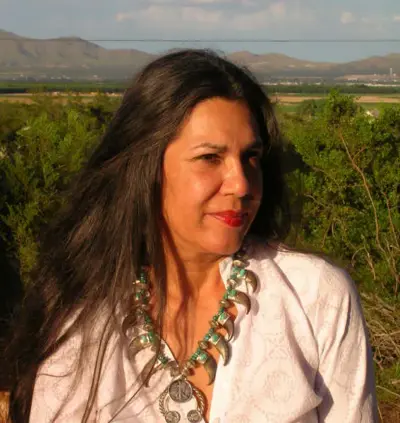
Ana Castillo is a Chicana novelist, poet, short story writer, essayist, editor, playwright, translator and independent scholar. Considered one of the leading voices in Chicana experience, Castillo is known for her experimental style as a Latina novelist. Her works offer pungent and passionate socio-political comment that is based on established oral and literary traditions. Castillo's interest in race and gender issues can be traced throughout her writing career. Her novel Sapogonia was a 1990 New York Times Notable Book of the Year, and her text So Far from God was a 1993 New York Times Notable Book of the Year. She is the editor of La Tolteca, an arts and literary magazine. Castillo held the first Sor Juana Inés de la Cruz Endowed Chair at DePaul University. She has attained a number of awards including a 1987 American Book Award from the Before Columbus Foundation for her first novel, The Mixquiahuala Letters, a Carl Sandburg Award, a Mountains and Plains Booksellers Award, a fellowship from the National Endowment for the Arts in fiction and poetry and in 1998 Sor Juana Achievement Award by the Mexican Fine Arts Center Museum in Chicago.
