Ratan Tata Quotes
I've never believed protectionism of that kind will lead us anywhere. I think you can have certain specific rules for engaging with India.. for example, not allowing mineral resources to be taken out of the country.. but there is not a shred of doubt in my mind that when you open an economy you should do it in totality. Foreign investment adds a sense of competition; we should see this as a wake-up call to modernise and upgrade. Companies that do not will undoubtedly die.
Tata, Ratan. Interview. India Today, Living Media India, 15 Mar. 2004, p. 22.


The Japanese learned very fast how to be great competitors, except that the American and European style of competition did not completely convert the Japanese domestic market where there is a huge degree of protectionism—especially with anything involving food.

A self-contained market would be one in which a country only makes products that it sells within its borders, and only sells products that in makes in the country. Very primitive cultures were self-contained markets, but trading generally takes place whenever two cultures interact unless politicians artificially prevent it.


Whitaker was right bet at that time his advice was not heeded. When Ireland late in the 20th century finally acted on his advice and eliminated almost all of their protectionism, the economy thrived and not only did the Irish emigration stop, but people began to immigrate to Ireland for the economic opportunity.


Zhou , Deng and other Chinese senior leaders carefully studied failures of 200th Century Communist nation economies from Russia to North Korea, and observed the successes of not only the United States and Western Europe, but South= Korea and Thailand å well and decided to transform to a capitalist style market and competitive economy. Zhou organized a cruse on which they invited Western economists and political economists to advise on how to make the transformation. Th Chinese took many of the Western ideas, placed them into a Chinese context, added some ideas of their own and proceeded ahead with the largest and most seectaculkar economic transformation and development in World history.


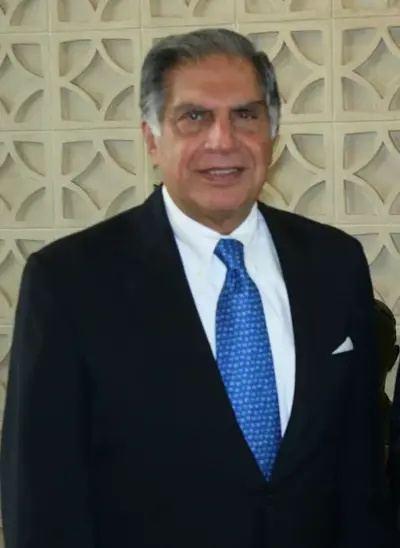
Ratan Naval Tata is an Indian industrialist, philanthropist, and a former chairman of Tata Sons. He was also chairman of Tata Group, from 1990 to 2012, and again, as interim chairman, from October 2016 through February 2017, and continues to head its charitable trusts. He is the recipient of two of the highest civilian awards of India, the Padma Vibhushan (2008) and Padma Bhushan (2000).
