Arthur Koestler Quotes
In Japan, there was no comparable (to our competitive economy) organic development; when the country was suddenly thrown open, the very idea of 'competition' was strange to them, and when Western economic writings were first translated into Japanese, it was necessary to make a new word for it. It was a combination of the Japanese words for 'race' and 'fight.'
The Japanese learned very fast how to be great competitors, except that the American and European style of competition did not completely convert the Japanese domestic market where there is a huge degree of protectionism—especially with anything involving food.
Arthur Koestler, 1905-1983, British Philosopher, Quoted in Leland Hazard, “Are Big Businessmen Crooks?”, The Atlantic Monthly, November 1961
Sourced by: Eigen's Political and Historical Quotations


This quotation is an amazing prediction that was 100 years in the future. China had a mercantile culture and tradition that was suppressed and controlled by the Emperors, the Europeans, the Nationalist Chinese, the Japanese, and finally the Communists who finally found a way to provide commercial freedom if not political, religious, and cultural liberty. But the talent for commerce was clear even 100 years ago to those who were broadminded enough to see it behind the antl-Asian prejudice of the 19th and early 20th century.


Hoover, a brilliant administrator, seems to have been on the wrong side of most economic issues.


Harris opened up trade with Japan for the United States. The problem at the time had nothing to do with the potential economic effects of trade on domestic industry or balance of payments, but for the Japanese was strictly a cultural problem. They were in great fear of what today some call “cultural imperialism”--the adoption of a foreign culture. The Japanese had been so fearful of cultural influence of foreigners that when some Japanese fishermen’s boat had been sunk and they had been rescued by foreign seamen and returned to Japan, they were executed as they had been “contaminated” and could “contaminate” the rest of the population.


The “Harvard Boys” referred to some free market economics professors who were advising the Russian government on their transition to a democratic industrial democracy. Free market capitalism was a great failure in that instance. However the free market enthusiasts would argue that Russia did not have a legal system, and organized crime was not controlled, and the Russian people where just not used to a free market.

Executed by the English for his part in the Easter Uprising. Although a century ago, Connolly captured the centrality of the development problem of every Third World County trying to compete in a global economy. The irony is that Ireland, long after achieving Independence, had the lowest standard of living in Europe for years. The great Irish breakthrough came as the result of the government making a huge national investment providing the capital for giving all of Ireland access to the Internet and passed laws for the information age. The Irish people took it from there. They leapfrogged wealthier nations and found customers all over the globe because they had the infrastructure to reach the rest of the globe just as fast as anyone else. See {589760} for Connolly’s idea to bring technology of the time to Ireland. The Irish information revolution was accomplished by using this idea for information technology instead of farm technology.
Pandita Indrani Rampersad. She is the first Hindu woman who ever became a pundit—a religious expert who guides Hindus. She is also a professor in the United States.
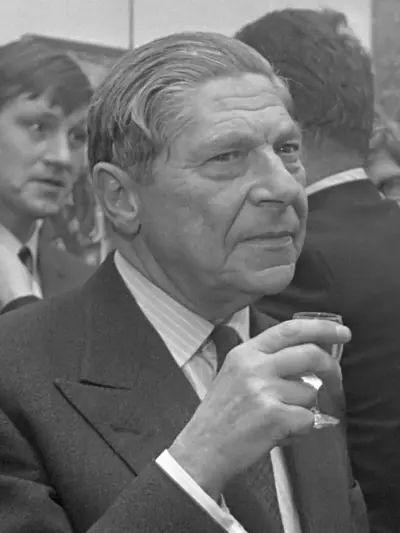
Arthur Koestler, CBE was a Hungarian British author, journalist and jewish intellectual. Koestler was born in Budapest and, apart from his early school years, was educated in Austria. In 1931, Koestler joined the Communist Party of Germany, but he resigned in 1938 because Stalinism disillusioned him.
