Lafcadio Hearn Quotes
The industrial competition of China would be incomparably more dangerous to Western civilization than that of any other nation, not only because of its multiformity, but also because it is a competition to which nature has set no climatic limits. Thrifty and patient and cunning as Jews, the Chinese can accommodate themselves to any climate and to any environment….. Once China has been penetrated by the forces of Western civilization, her population will begin to display new activities, and to expand in all possible directions. Chinese competition will have to be faced, probably, very much sooner than had been expected.
This quotation is an amazing prediction that was 100 years in the future. China had a mercantile culture and tradition that was suppressed and controlled by the Emperors, the Europeans, the Nationalist Chinese, the Japanese, and finally the Communists who finally found a way to provide commercial freedom if not political, religious, and cultural liberty. But the talent for commerce was clear even 100 years ago to those who were broadminded enough to see it behind the antl-Asian prejudice of the 19th and early 20th century.
Lafcadio Hearn, 1850–1904, Journalist, Writer and Oriental Scholar, “China and the Western World”, The Atlantic Monthly, April 1896
Sourced by: Eigen's Political and Historical Quotations

What makes this quote significant is the data—the end of the 19th century and here was an author, in a prestigious journal, warning about the potential economic competition from China which at the time was seen by most as a backward, primitive civilization which could never compete with the West. Also, Hearn was the first writer who communicated information about Asia to Americans on a large scale.


Executed by the English for his part in the Easter Uprising. Although a century ago, Connolly captured the centrality of the development problem of every Third World County trying to compete in a global economy. The irony is that Ireland, long after achieving Independence, had the lowest standard of living in Europe for years. The great Irish breakthrough came as the result of the government making a huge national investment providing the capital for giving all of Ireland access to the Internet and passed laws for the information age. The Irish people took it from there. They leapfrogged wealthier nations and found customers all over the globe because they had the infrastructure to reach the rest of the globe just as fast as anyone else. See {589760} for Connolly’s idea to bring technology of the time to Ireland. The Irish information revolution was accomplished by using this idea for information technology instead of farm technology.

The Japanese learned very fast how to be great competitors, except that the American and European style of competition did not completely convert the Japanese domestic market where there is a huge degree of protectionism—especially with anything involving food.
Zhou , Deng and other Chinese senior leaders carefully studied failures of 200th Century Communist nation economies from Russia to North Korea, and observed the successes of not only the United States and Western Europe, but South= Korea and Thailand å well and decided to transform to a capitalist style market and competitive economy. Zhou organized a cruse on which they invited Western economists and political economists to advise on how to make the transformation. Th Chinese took many of the Western ideas, placed them into a Chinese context, added some ideas of their own and proceeded ahead with the largest and most seectaculkar economic transformation and development in World history.

10 centuries ago was a time when the Arabs were far more advanced and modern than other cultures including the Christian West that was in the Dark Ages. However, in the 12th century there was a “closing”—a narrowing of allowable Islamic thinking, and since then, Islamic people have had great difficulty with change or modernity. Not all Muslim nations are equally rigid but the Arabs are at the extreme among Islamic counties.


A startlingly bad prediction by a Nobel-prize winning economist particularly given it was stated in 1998 rather than a much earlier date when the potential of the Internet wasn’t already apparent. Ironically, the quote is from a Red Herring article he wrote titled “Why Most Economists’ Predictions Are Wrong” in which he asserts that most economists predictions are wrong because they overestimate the impact of future technologies. This quote is part of a longer, equally incorrect quote: “The growth of the Internet will slow drastically, as the flaw in ‘Metcalfe’s law' becomes apparent: most people have nothing to say to each other! By 2005, it will become clear that the Internet’s impact on the economy has been no greater than the fax machine’s.” See related quotes.


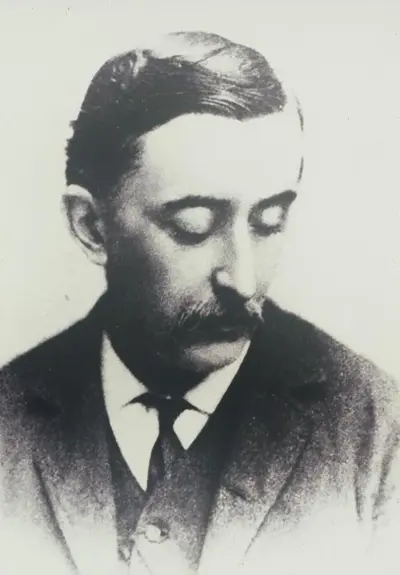
Koizumi Yakumo, born Patrick Lafcadio Hearn (/hɜːrn/; Greek: Πατρίκιος Λευκάδιος Χερν), was a Japanese writer of Greek-Irish descent. He is best remembered for his books about Japanese culture, especially his collections of legends and ghost stories, such as Kwaidan: Stories and Studies of Strange Things. In the United States, he is also known for his writings about New Orleans, based on his decade-long stay there.
