Max Weber Quotes
Civic rationality and modern capitalism triumphed in the medieval northern European cities – but not in Chinese, Indian or Muslim cities
Max Weber, 1864–1920, German Sociologist and Political Economist, Quoted by Dr Amyn B Sajoo, Introductory Remarks to Contemporary Islam (s) and Muslims Series: The Umma in the City, February 2008
Sourced by: Eigen's Political and Historical Quotations


This was an incredible prediction that few people thought was possible. This speech was given in the early days of WWII when it was far from clear that we would win.


This phrase and the theory behind it are often misattributed to Samuel P. Huntington who first used it as the title of a talk at the American Enterprise Institute in 1992 and the following year used if as the Title of a very important article in Foreign Affairs. Huntington was very familiar with Lewis’ works and doubtless used the Lewis phrase as it perfectly fit Huntington’s concept. See {604193}.


His is the most cogent explanation of the early Muslim acceptance of slavery. However, he does not explain why Islamic nations were the last to make slavery illegal—usually under pressure from Christian nations or why illegal slavery continued to be openly practiced in Sudan and a few other Islamic countries even into the 21st century.


This quotation is an amazing prediction that was 100 years in the future. China had a mercantile culture and tradition that was suppressed and controlled by the Emperors, the Europeans, the Nationalist Chinese, the Japanese, and finally the Communists who finally found a way to provide commercial freedom if not political, religious, and cultural liberty. But the talent for commerce was clear even 100 years ago to those who were broadminded enough to see it behind the antl-Asian prejudice of the 19th and early 20th century.
10 centuries ago was a time when the Arabs were far more advanced and modern than other cultures including the Christian West that was in the Dark Ages. However, in the 12th century there was a “closing”—a narrowing of allowable Islamic thinking, and since then, Islamic people have had great difficulty with change or modernity. Not all Muslim nations are equally rigid but the Arabs are at the extreme among Islamic counties.


While most did not believe this at the time, it has come to pass that Russia first, and then China and India have developed an educated, competent workforce, that is very competitive to our own. This speech was given in the early days of WWII when it was far from clear that we would win.


Arguments against the Partition of India at the time centered around the poor economic viability of a separate Muslim state. However Iqbal and others placed the cultural issues in the forefront. They eventually prevailed.


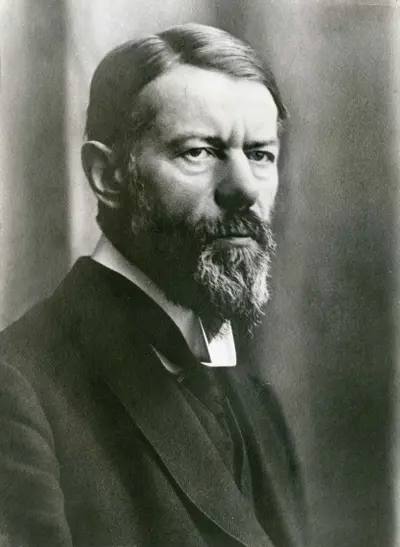
Maximilian Karl Emil Weber was a German sociologist, historian, jurist, and political economist, who is regarded among the most important theorists on the development of modern Western society. His ideas would profoundly influence social theory and social research. Despite being recognized as one of the fathers of sociology, along with Auguste Comte and Émile Durkheim, Weber never saw himself as a sociologist, but as an historian.
