Richard Nixon Quotes
It's long been common practice among many to draw a distinction between "human rights" and "property rights," suggesting that the two are separate and unequal - with "property rights" second to "human rights."
Nixon, Richard. "Radio Address on the State of the Union: The Economy." Public Papers of the Presidents of the United States: Richard Nixon, 1974. U.S. Government Printing Office, 1975.

See {587703} for a similar statement by a Supreme Court Justice.


See George Mason for the contrary view. {606646}


Day was often associated with left wing causes, but she was very hard to classify in traditional political terms. This quotation shows that unlike most communists and many socialists, she was an advocate of private property although she fought for the ability of a larger proportion of the population to have property.

The people who raise the issue do not claim that property rights are not human rights. They do analyze different rights to priorities. For example, most people would view the right to life as more important than the right to travel. Unfortunately rights sometimes come into conflict. What Rand calls the “dichotomy” is the prioritizing of property fights as lower than some other rights such as the right to life. Those people would argue that a businessman should not have a facility that is a public hazard and interfere with his property rights to protect the lives of the public who might encounter the hazard.


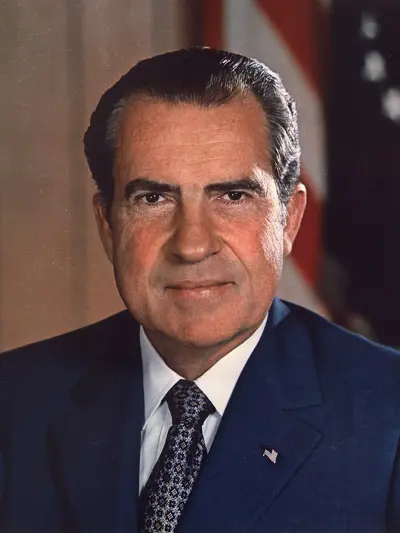
Richard Milhous Nixon was the 37th president of the United States, serving from 1969 to 1974. A member of the Republican Party, Nixon previously served as the 36th vice president from 1953 to 1961, having risen to national prominence as a representative and senator from California. After five years in the White House that saw the conclusion to the U.S. involvement in the Vietnam War, détente with the Soviet Union and China, and the establishment of the Environmental Protection Agency, he became the only president to resign from the office, following the Watergate scandal.
