Calvin Coolidge Quotes
We need not concern ourselves much about rights of property if we faithfully observe the rights of persons.
Coolidge, Calvin. "Have Faith in Massachusetts: State Senate President Acceptance Speech, January 7, 1914." Have Faith in Massachusetts: A Collection of Speeches and Messages. Houghton Mifflin, 1919, p. 7.


This statement summarized what had been a basic principle of American Law as derived from English law. See {587704}.

See {587703} for a similar statement by a Supreme Court Justice.


Peace on Earth


Hayward claimed that Wilson was the first American President who ever criticized the American Constitution. Many do not agree as Madison and Jefferson in part, along with most other Americans, found the Constitution so wanting that it was ratified only on condition of the passage of the Bill of Rights. Jackson, was distressed by the limitations on the President and many others had their objections, but Wilson, before he became a politician was a prominent academic political scientist and wrote voluminously and had an intellectual following so his criticism was not considered so “political” as others.

While this principle is consonant with almost all Americans today, at the time, there were many in the upper classes for whom TR’s statement was an unwelcome surprise.

There was much unrest caused by many evictions of poor tenant by landlords who were not recognizing any of their “duties”. This problem and the degree of government regulatory and legislative involvement have been on the political agenda for eons and continue to this day. The duties tend to change with times and places; the rights that the property owners assert seem to be constant and uniform.


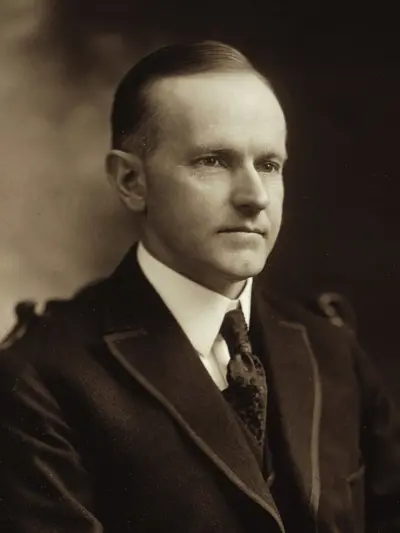
Calvin Coolidge was an American lawyer and politician who served as the 30th president of the United States from 1923 to 1929. A Republican lawyer from New England, born in Vermont, Coolidge worked his way up the ladder of Massachusetts state politics, eventually becoming governor of Massachusetts. His response to the Boston Police Strike of 1919 thrust him into the national spotlight and gave him a reputation as a man of decisive action. The next year, he was elected the 29th vice president of the United States, and he succeeded to the presidency upon the sudden death of Warren G. Harding in 1923. Elected in his own right in 1924, he gained a reputation as a small-government conservative and also as a man who said very little and had a rather dry sense of humor.
