Nandan Nilekani Quotes
It's because Gandhi believed in villages and because the British ruled from the cities; therefore, Nehru thought of New Delhi as an un-Indian city.
Nilekani, Nandan. Imagining India: The Idea of a Renewed Nation. Penguin Press, 2009.


The chance was the fact that war—the War of 1812—had been declared between Britain and America. Tecumseh allied himself with General Isaac Brock, the British Commander of the Western Forces. Tecumseh himself was put in charge of all Indian forces and given the rank of a British Brigadier General. However, Brock was killed shortly thereafter, and his replacement, General Procter, was not as skilled at working with Indian Allies and the British-Indian alliance was defeated bringing to an end the notion of “one great Indian nation.”

That is exactly what happened. However it would not happen until after the Second World War.


This speech to over 100,000 people galvanized the Indian nationalists They had been asking the British to change the constitution to give India more independence. Churchill was opposed to any policy that would diminish the British Empire, but needed the Indians as men of India served in the British Army in every major theater of WWII. So instead of saying "No" Churchill held out the possibility but at a later time. He argued that it was inopportune to alter the Constitution in the midst of a world war.


As early as 1933, 14 years before Indian independence, there was a movement for a separate Muslim nation within India. Ironically, Hindu India was never a nation in any sense of the word, but was a series of independent principalities much like Italy before its unification. However, with the Muslim conquest of the various Indian states, there was a central authority, ruler, and nation for the first time. Later the Muslims had to argue that India was not a country when it was they who had made it such. When the Muslim Emperors were in power, they argued that India was one country under their authority. But when they lost power, the Muslims argued the other side of the issue.


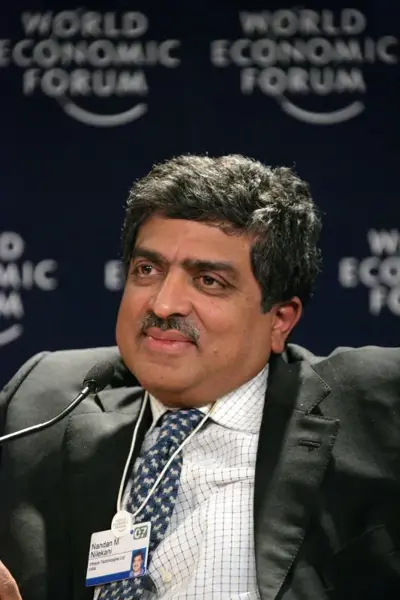
Nandan Nilekani is an Indian entrepreneur. He co-founded Infosys and is the non-executive chairman of Infosys replacing R Seshasayee and Ravi Venkatesan, who were the co-chairs of the board, on 24 August 2017. After the exit of Vishal Sikka, Nilekani was appointed as non-executive chairman of the board effective 24 August 2017. He was the chairman of the Unique Identification Authority of India (UIDAI). After a successful career at Infosys, he headed the Government of India's technology committee, TAGUP. He is a member of Indian National Congress but not active in politics as of 2019.
