Richard Dawkins Quotes
It would be intolerant if I advocated the banning of religion, but of course I never have.
Dawkins, Richard. Interview by Andrew Marr. BBC, 2006.


This was the beginning of the inquisition.

Despite the fact that the statues were holy symbols to Buddhists, they were offensive to Muslims who say statues as “graven images” prohibited by the Koran. See Wakil Ahmad Muttawakil {608419} and Jamal’s other quotation {604665}.


Pen name: Jack Nipps

Ironically, without the word “wicked” most people would regard the first sentence as a good description of elements of a modern democracy. It illustrates that for the Islamic fundamentalist democracy substitutes the rule of man for the rule of God, freedom of speech allows heresy and blasphemy to to uttered and communicated, and religion which is supposed to inform and direct politics. So what is good for the lover of democracy is the very thing that is bad for Islam. This is not a uniquely Islamic viewpoint. It has been and is held by fundamentalist Christians and Jews as well who would return to Biblical law punishing blasphemy and heresy with death and have religion drive all politics.

The Soviet state had varied views regarding religion in different times. In the early days of the Russian Revolution, the Russian Orthodox Church was a major supporter of the Csar and serfdom. That caused a certain hostility to the Russian Church. That Church meanwhile had previously been extremely hostile to Jews and Roman Catholics and never recognized Protestant Churches. So Russians as a group were already discriminating against all religion except the Russian Orthodox Church before the Communist Revolution took place. When the Russian Communists were well entrenched in power, they saw the Russian Church as an obstacle to modernization and were hostile to any group that had a loyalty to any force or deity that was not the Soviet State.

Williams was the first theologian who not only advocated religious toleration but argued that Christianity demanded it and the separation of church and state.

In one of the historical ironies of the 12th century, a Christian sect preferred the rule of the Muslims than their Christian brethren—on the grounds of religious tolerance. It illustrates the changes that take place over time. By the 21st century, it was the Christians who were thought of as tolerant and the Muslims as the opposite.


In 2005 an Egyptian writer, Usama Anwar Ukasha, criticized one of the Prophet’s companion’s role for causing dissention and divisiveness in Islamic history. Some called for his legal punishment for slandering a holy figure (see {588714}) and a law case was brought to force him to divorce his wife—so that she would not be “contaminated by his heretical thoughts. Al-Bana argued for freedom of thought and speech on such subjects. His view was particularly important since he was the brother of Hassan Al-Bana, the founder of the Muslim Brotherhood, a powerful fundamentalist organization. Note that Al-Bana’s call for intellectual freedom does not go so far as to say that it should be legal to criticize The Prophet Muhammad and it illustrates how far even modern Islam has to go to meet reasonable standards of freedom of thought and speech.
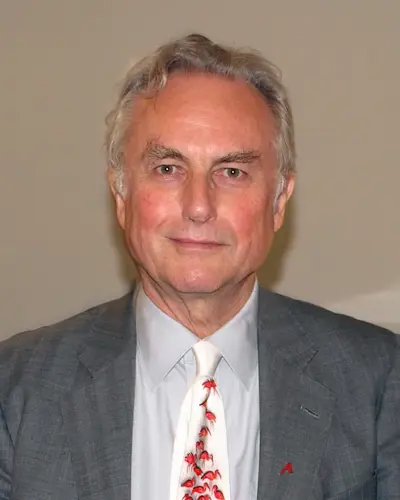
Richard Dawkins FRS FRSL is a British ethologist, evolutionary biologist, and author. He is an emeritus fellow of New College, Oxford, and was the University of Oxford's Professor for Public Understanding of Science from 1995 until 2008. An atheist, he is well known for his criticism of creationism and intelligent design.
