Woodrow Wilson Quotes
...it would be a mistake...to ascribe to Roman legal conceptions an undivided sway over the development of law and institutions during the Middle Ages... The Laws of Moses as well as the laws of Rome contributed suggestions and impulse to the men and institutions which were to prepare the modern world; and if we could have but eyes to see... we should readily discover how very much besides religion we owe to the Jew.
Wilson, Woodrow. The State: Elements of Historical and Practical Politics. D. C. Heath & Co., 1889, p. 143.


In addition to the Muslim world during the Crusades losing control of the Holy City for the first time in 400 years, the Christians stabled their horses on the Al Axa Mosque and the Dome of the Rock, two of Islam’s holiest places. In addition, the Crusaders, after taking the city, slaughtered most of the inhabitants—Muslims, Jews and even fellow Christians who were Eastern Orthodox—more than 30,000 in just a day or so. It was a reign of terror on a scale that even today, it is shocking to most. So where as to us the Crusades were an interesting of aberrant part of history, to many Muslims of the Middle East the thought or discussion of the Crusades is traumatic even today.

He was referring to the entrepreneurial style and mercantile capitalism which most historians believe that the Jews developed originally and which led to the rapid initial development of the United States. He was not referring to the Jewish people who came to America. The historical Jewish development of much of modern capitalism and business, ironically, was the consequence of Jews in most of Europe not being allowed to own land or practice any of the professions. So the best of the Jewish talent was directed to trading, merchandizing and banking and they developed many of the basic capitalistic tools of today such as double entry bookkeeping.


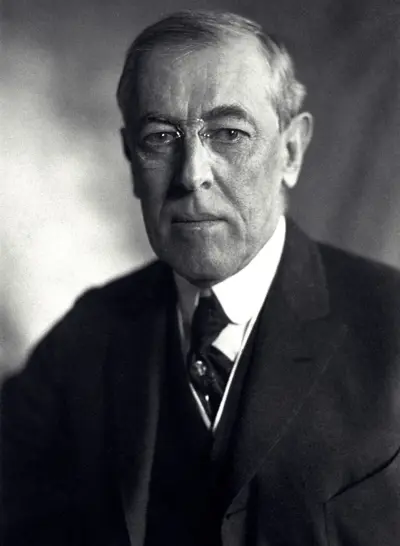
Thomas Woodrow Wilson was an American politician and academic who served as the 28th president of the United States from 1913 to 1921. A member of the Democratic Party, Wilson served as the president of Princeton University and as the 34th governor of New Jersey before winning the 1912 presidential election. As President, Wilson led the United States into World War I in 1917. He was the leading architect of the League of Nations, and his progressive stance on foreign policy came to be known as Wilsonianism. Scholars have generally ranked Wilson in the upper tier of U.S presidents, although he has been criticized for supporting racial segregation and white supremacy.
