Goldwin Smith Quotes
But if anyone supposes that there was no commercial fraud in the Middle Ages, let him study the commercial legislation of England for that period, and his mind will be satisfied, if he has a mind to be satisfied and not only a fancy to run away with him.
Smith, Goldwin. "An Address to the Oxford School of Science and Art." Lectures and Essays, Hunter, Rose & Co., 1881, p. 87.


This is one of the earliest examples of regulation for consumer protection. Later, the Magna Carta would incorporate the concept of standard weights and measures.


There were few if any consumer protection laws in those days and many wealthy aristocrats made their money by taking advantage of the poor. They were the landowners, bankers, financiers and often the industrialists. Shaw was a sarcastic social critic and this is a typical line he gave his upper class characters. Today, we have more controls on business and finance, and many wealthy business people have gotten that way by providing great value to the consumers and being honest. However, we still have large numbers of wealthy members of society who do make their money from the poor and middle class by unethical and often illegal means. In the aftermath of the Meltdown of 2008. hundreds of thousands of the homes of the working poor and middle class were foreclosed by the major banks forging the legal documentation for the foreclusures. Millions of consumer contracts are issued that even a PhD cannot understand the terms of without special legal and financial training. There is even a legal definition of a salesperson lying to make a sale which is so commonplace that our law excuses it and calls it "puffing". However, there has been over time, improvement over Shaw's era.

Theodore Roosevelt had made many changes to control corporate rapaciousness and disregard for the law. Taft, his handpicked successor, wanted to roll back some of the regulations feeling that the problem of corporate corruption and venality had been solved. TR did not agree and the men’s close friendship dissolved over this issue—so much so that Roosevelt ran against Taft in the 1912 election.

A Pure Food bill had failed to pass the Congress for years until Roosevelt took up the cause. The modern federal role in the quality control of food products had its origins with TR.


Here is another example of “the good old days” phenomenon. Similar complaints are made in most generations about most vices.


The Register was one of the most widely circulated journals of early America and Niles one of the most popular and influential journalists. Banks at the time could print their own paper money—unregulated by anyone. Often then did so knowing full well that if all the paper money they issued were presented for redemption they could not possible pay, as there was by the resolution of the bank directors not enough gold and silver to redeem all the money. Although few national leaders approved of the practice, it would have then been unthinkable and considered unconstitutional for the Federal government to interfere with a private bank’s right to print money or issue promissory notes regardless of the backing. See John Adams {615650} for a similar view.

At the time of this interview there had been a decade of business fraud at many different levels. The regulatory agencies supposedly responsible for the regulation had neither the staff or the political will to even enforce the laws and regulations then in existence and there were many loopholes in those. Many business interests opposed all regulation and strict enforcement as a diminution of the health of the economy. Others, like Greenspan, saw fraud as corrupting the markets themselves and therefore the usual capitalistic economic competitive forces that would control business do not operate with extensive fraud.

Kennedy, the father of JFK, had been one of the sleaziest of the stock market manipulators in the country. Prior to 1934 the Republican Hoover philosophy had prevailed letting the market regulate itself. But the practices of many of the Wall Street leaders were by modern standards outright thievery.FDR created the first Commission to regulate publicly traded stock transactions and schemes. He made a shrewd pick with Kennedy who was very egotistical and ambitious for power and recognition for Kennedy not only was an accomplished master at the skullduggery of the day, but he had no loyalty to the wealthy brokerage and financial leadership class as Kennedy was a Roman Catholic and at the time Catholics were never really accepted by upper class Protestant society. He turned out to be not only the first SEC Chairman but the one who demonstrated the efficacy of such regulation. He was then rewarded with the Ambassadorship to England the plum diplomatic assignment of the country.

She was one of the first female physicians in England. However, she could not study there or sit for her examinations. She trained in the Scotland, Ireland and Swizerland where she earned her medical degree.


1st Earl of Beaconsfield. In the United States, President Theodore Roosevelt shocked the major business interests when he proposed regulating food and other government quality assurance of the private marketplace. Many Americans saw this as an overdue reform. One of the reasons was that Prime Minister Disraeli had advocated government regulation a quarter of a century earlier with statements like this quotation.


Some people erroneously claim that Clement Atlee was the target of this insult. He was not according to Churchill himself.

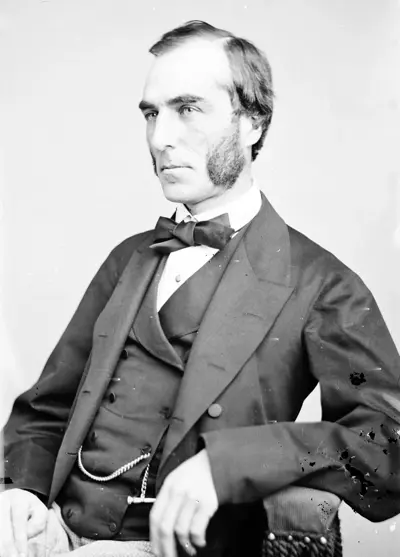
Goldwin Smith was a British historian and journalist, active in the United Kingdom and Canada. In the 1860s he also taught at Cornell University in the United States.
