Werner Sombart Quotes
Is there not some justification for the opinion that the United States owe their very existence to the Jews? And if this be so, how much more can it be asserted that Jewish influence made the United States just what they are—that is, American? For what we call Americanism is nothing else, if we may say so, than the Jewish spirit distilled.
He was referring to the entrepreneurial style and mercantile capitalism which most historians believe that the Jews developed originally and which led to the rapid initial development of the United States. He was not referring to the Jewish people who came to America. The historical Jewish development of much of modern capitalism and business, ironically, was the consequence of Jews in most of Europe not being allowed to own land or practice any of the professions. So the best of the Jewish talent was directed to trading, merchandizing and banking and they developed many of the basic capitalistic tools of today such as double entry bookkeeping.
Werner Sombart, 1863–1941, German Economist, The Jews and Modern Capitalism
Sourced by: Eigen's Political and Historical Quotations


He and almost all of the Jews in Germany were expected to act like Germans. There was no room for maintaining and developing their own ethnic customs and traditions. When he arrived at New York, he was treated as a great celebrity by Mayor La Guardia, who was fluent in Yiddish, and other dignitaries some of whom were Jews and even met President Warren G. Harding. He lectured at City College and for the first time in his life saw Jews who had any distinguishing culture and customs—and the informality, egalitarianism, gregarious, free speaking, fun loving was just the opposite of the norms that he had grown up with in Germany which he did not like. See {640911}. He would later become a part of that culture and be seen as a leader, even being offered the Presidency of the new state of Israel in 1949.

Samuel Langhorne Clemens, 1835-1910


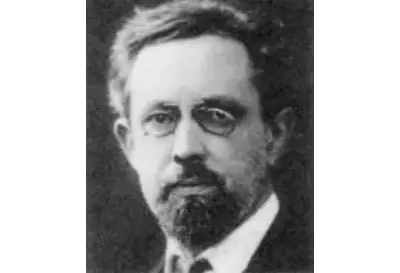
Werner Sombart was a German economist and sociologist, the head of the "Youngest Historical School" and one of the leading Continental European social scientists during the first quarter of the 20th century. The term late capitalism is accredited to him. The concept of creative destruction associated with capitalism is also of his coinage. His magnum opus was Der moderne Kapitalismus. It was published in 3 volumes from 1902 through 1927. In Kapitalismus he described four stages in the development of capitalism from its earliest iteration as it evolved out of feudalism, which he called proto-capitalism to early, high and, finally, late capitalism —Spätkapitalismus— in the post World War I period.
