Jane Austen Quotes
It will, I believe, be everywhere found, that as the clergy are, or are not what they ought to be, so are the rest of the nation.
Austen, Jane. Mansfield Park. T. Egerton, 1814, p. 196.


This quotation is sometimes used to show that Washington thought religion important. Most of the founding fathers thought religion both important and potentially dangerous. They had observed Europe tear itself apart over religious differences. Note that Washington uses the words “religious principles” as opposed to “religion” or “religious prescriptions” or “religious doctrine.” The founders were not hostile to the concept of religion—even Jefferson and Franklin saw potential values in religion and religious institutions. They were hostile, however, to letting any particular sect dominate the religious environment of the nation. Nor did they want any of the religions controlling or operating the civil government. See {625616}.

Objectors to the Separation of Church and State Doctrine point to this quotation to justify giving preferences to Christians in majority Christian societies and presumably to prefer Muslims in Islamic nations. Most of the Founding Fathers and most of the general population were on the opposite side of this issue. Hence the First Amendment was one of the conditions for ratification. There has always been a large minority who believe that America was founded by people who were mostly Christian (Protestant) and there is nothing wrong with having America be a Christian nation and preferring Christians for key government positions.


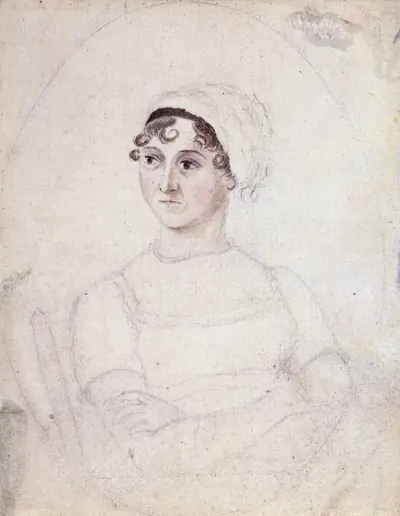
Jane Austen was an English novelist known primarily for her six major novels, which interpret, critique and comment upon the British landed gentry at the end of the 18th century. Austen's plots often explore the dependence of women on marriage in the pursuit of favourable social standing and economic security. Her works critique the novels of sensibility of the second half of the 18th century and are part of the transition to 19th-century literary realism. Her use of biting irony, along with her realism, humour, and social commentary, have long earned her acclaim among critics, scholars, and popular audiences alike.
