Edward Said Quotes
It was thought that to rally Islam against godless communism would be doing the Soviet Union a very bad turn indeed, and that, in fact, transpired. In 1985, a group of mujahedeen came to Washington and was greeted by President [Ronald] Reagan, who called them "freedom fighters."
Barsamian, David, and Edward W. Said. Culture and Resistance: Conversations with Edward W. Said. South End Press, 2003, p. 110.


Wilson had been successful in getting money and arms to the Muslim Mujahedeen in Afghanistan to fight the Russians who had invaded and occupied the country. But the Russian armed helicopters gave the Russians control of most of the company. Wilson wanted to send Stingers to the Mujahedeen, but the agencies were worried that the missiles might fall into the hands of anti-American radical Muslims. It turned out that the agencies were correct and after the defeat of Russia, many of the Mujahedeen then, buoyed by their great victory over a Superpower, came after the United States and Western nations who were “occupying Islamic land”. The terrorist tactics, that the United States ignored when the Russians were the victims, became the major military and foreign policy problem of America and the West.


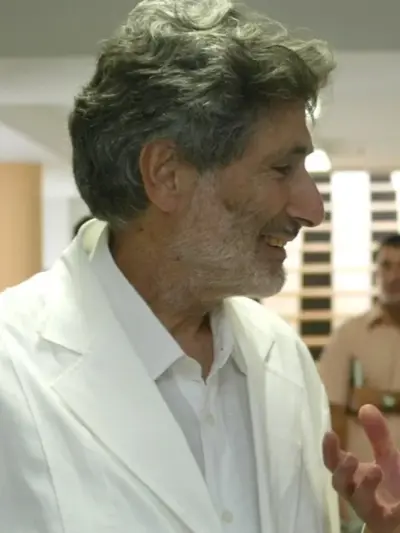
Edward Wadie Said was a professor of literature at Columbia University, a public intellectual, and a founder of the academic field of postcolonial studies. A Palestinian American born in Mandatory Palestine, he was a citizen of the United States by way of his father, a U.S. Army veteran.
