Samuel P. Huntington Quotes
It was this society and culture that among other things - including economic opportunities here and repression in Europe - attracted subsequent generations of immigrants to this country.
Huntington, Samuel P. "Interview by Amina R. Chaudary." Islamica Magazine, no. 19, 2007.


Most immigration reformers want to open immigration more widely. Ward wanted immigration restricted to certain ethnicities and limited. Essentially, this was code for anti-Catholicism and anti-Semitism. The immigrants that he described as not being “helpful” have made some of the greatest contributions to America. One element of the immigration debate that is illustrated by this quotation is whether the United State should be homogeneous or heterogeneous. It has been the latter and that has brought the best of cultures of the world to the United States which has constantly been shaped by its immigrants even as it shaped and assimilated the immigrants.


This is a complaint similar to that made by anti-immigrant Americans. France, like most other countries of the world, has never had the large scale immigration of today, nor have they had such a large proportion of the same ethnicity at once—in this case, Muslim North Africans. There were never, before the last decades, enough immigrants of any ethnicity in France to have a choice of maintaining their traditional languages and culture and not learning French or otherwise assimilating. America, in contrast, had large immigrations of different ethnicities, and despite the erroneous beliefs of immigration opponents, these blocs of immigrants have wherever there was sufficient density—usually cities, they maintained their old language and other customs. However, their children and the next generation in almost all cases have abandoned the language and many of the customs of the old country. This was true of the Germans, the Irish, the Italians, the European Jews, the Russian Jews, the Scandinavians’, and the Hispanics with their different cultures.


She was referring to the Muslim immigrants who were then coming into Europe in large numbers. Europe in general, and Italy in particular, have never had the American experience of assimilation of large numbers of immigrants, and many Muslims came to Europe just for the economic opportunities but did not like or respect the culture or the values. Some even preached hatred of the Christian West and fomented terrorism. This was different from America where Muslim immigrants arrived and despite the difficulties of new immigrants most thrived and were able to assimilate yet maintain their religion and cultural customs. At the same time many American Islamic immigrants represented the more modern Islamic which valued freedom and pluralism and unlike most Muslim nations of today, appreciated the advanced, modernistic, tolerant Islam of 1000 years ago when tolerance and freedom of thought within an Islamic framework made some Muslim countries the most advanced in the world.

Most immigration reformers want to open immigration more widely. Ward wanted immigration restricted to certain ethnicities and limited. He wanted a uniformity of assimilation and not diversity.
Most immigration reformers want to open immigration more widely. Ward wanted immigration restricted to certain ethnicities and limited. He wanted a uniformity of assimilation and not diversity.


This is a very instructional political quotation. It shows us that the popular American narrative of the ideal immigrant who assimilated to everything American was false even in 1916. Almost 100 years later, anti-immigration advocates would complain that the modern immigrant was not totally assimilating as immigrants did in the past. Of course they never did in the past totally assimilate. The assimilation has generally been in the areas of desire for freedom and individual opportunity, democracy, rule of law, human dignity and respect for others. However, immigrants have always brought new customs, foods, literature, modes of worship, language, and values from the “old country”. Bourne was one of the first writers with a national audience to question the classic but never real “melting pot” theory of immigration and suggest the “salad” model though he never used the term.
It was on this date that for the first time in American History, the number of minority babies born was greater than the number of majority--white, non Hispanic—babies.

This is the origin of the “melting pot” term. Although British, Zangwill wrote this play for America and it was first produced in Washinton DC with Theodore Roosevelt in attendance. The theme was just the concept that most Americans think of relative to the large immigration of so many peoples to America.

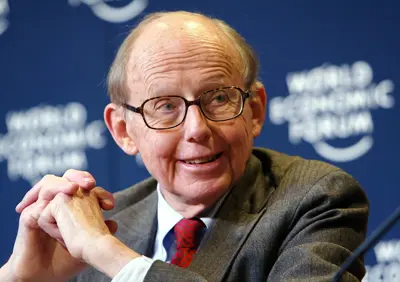
Samuel Phillips Huntington was an American political scientist, adviser and academic. He spent more than half a century at Harvard University, where he was director of Harvard's Center for International Affairs and the Albert J. Weatherhead III University Professor.
