Enuga Sreenivasulu Reddy Quotes
It was easy to kill in South Africa –- to throw a bomb in a movie theatre, for instance - and create panic. But the leaders of the ANC rejected hatred of whites and violence against civilians. They were listened to
The African National Congress violent attack on apartheid in South Africa was amazing in the sense that with all the anger and the terrible behavior including murder and shooting of unarmed demonstrators, the ANC not only urged rejection of terrorism against civilians but managed to keep their followers under control. When apartheid finally fell and the ANC Black majority government came to power, the lack of retribution was not only a model of reconciliation for the world but maintained the best industrial economy in Africa.
Enuga Sreenivasulu Reddy, Indian national & Principal secretary for the United Nations Special Committee Against Apartheid, United Nations Assistant Secretary-General, Speech, University of Connecticut under the auspices of UNESCO Chair and Institute of Comparative Human Rights, April 8, 2004
Sourced by: Eigen's Political and Historical Quotations


This famous quotation, from this important address, at such a critical time in history has been admired for years. Despite his great oratory, the next months were to see almost 2 million Indians of all faiths killed in what was probably the worst internecine violence in human history. Ironically, the politically motivated terrorism had stopped since all the decisions had been made. The motivation for the frightful atrocities that took place from then on was vengeance and fear of more vengeance." 1st Earl Mountbatten of Burma


The statement was made just before Kenyan Independence was official. His statement was surprising to many people who perceived him as a racist and anti-white. There was a fear that whites would no longer be welcome in Kenya after independence, but Kenyatta’s leadership maintained a pluralistic society.

South Africa’s transition from apartheid white minority rule to an interracial society with Black majority rule was one of the great political achievements in history. The Black leadership set a tone of reconciliation and inclusiveness that there was neither back retribution and vengeance, nor extensive white flight. Tutu and Nelson Mandella were two of those most resonsible for the leadership, but the good will and Christian charity of the South African blacks was the key to the success where all other white dominated African nations were NOT able to transition without extensive violence and/or flight.


He and Mandella were both awarded the Nobel Peace Prize for engineering what was probably the largest transition of power without violence in world history.


Many radicals of the day argued that violence was a legitimate form of protest and self defense. Goldman urged then not to advocate violence because under the then existing law and practical considerations, that gave the law enforcement authorities the tools to persecute the dissidents.


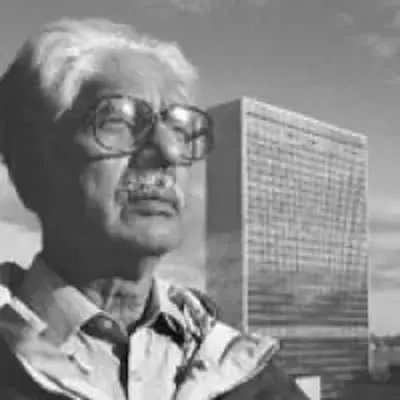
Enuga Sreenivasulu Reddy, also known as E. S. Reddy, was an Indian-born diplomat at the United Nations who led the anti-apartheid efforts at the UN's Special Committee against Apartheid (where he was the secretary from 1963 to 1965) and its Centre against Apartheid (where he was the director from 1976 to 1983). He also served as director of the UN Trust Fund for South Africa and the Educational and Training Programme for Southern Africa. During his time in these roles, he campaigned for economic boycott of the then Government of South Africa, advancing anti-apartheid actions including a combination of economic and social measures. He also lobbied for the release of the imprisoned leader Nelson Mandela.
