D'Arcy McGee Quotes
It takes three-quarters of the world in these days to hold the Irish family, and is pleasant to know that some of the elder sons of the family are considered by their discriminating fellow citizens worthy to be entrusted with the liberties and fortunes of their adopted countries.
D'Arcy McGee, 1825-1868, Irish National and member of Canadian Parliament (Liberal), 1862
Sourced by: Eigen's Political and Historical Quotations


Most immigration reformers want to open immigration more widely. Ward wanted immigration restricted to certain ethnicities and limited. He wanted a uniformity of assimilation and not diversity.


Quintus Horatius Flaccus

This is a very instructional political quotation. It shows us that the popular American narrative of the ideal immigrant who assimilated to everything American was false even in 1916. Almost 100 years later, anti-immigration advocates would complain that the modern immigrant was not totally assimilating as immigrants did in the past. Of course they never did in the past totally assimilate. The assimilation has generally been in the areas of desire for freedom and individual opportunity, democracy, rule of law, human dignity and respect for others. However, immigrants have always brought new customs, foods, literature, modes of worship, language, and values from the “old country”. Bourne was one of the first writers with a national audience to question the classic but never real “melting pot” theory of immigration and suggest the “salad” model though he never used the term.

Bourne was one of the first writers with a national audience to question the classic but never real “melting pot” theory of immigration and suggest the “salad” model though he never used the term.


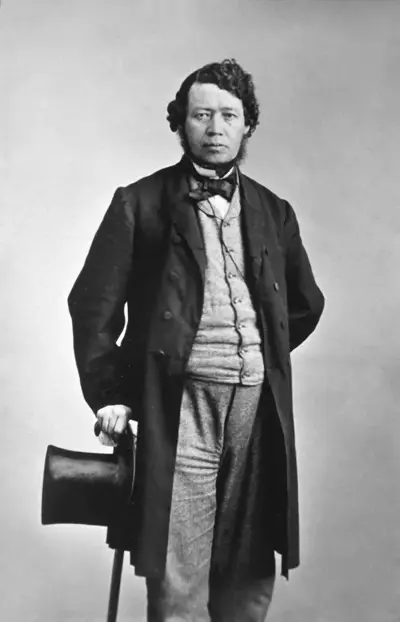
Thomas D'Arcy Etienne Grace Hughes McGee was an Irish-Canadian politician, Catholic spokesman, journalist, poet, and a Father of Canadian Confederation. The young McGee was a Catholic Irishman who opposed British rule of Ireland, and worked for a peasant revolution to overthrow British rule and secure Irish independence. He escaped arrest and fled to the United States in 1848, where he reversed his political beliefs. He became disgusted with American republicanism and democracy, and became intensely conservative in his politics and in his religious support for the Pope. He moved to Canada in 1857 and worked hard to convince the Irish Catholics to cooperate with the Protestant British (members of the church) in forming a Confederation that would make for a strong Canada in close alliance with Britain. His passion for Confederation garnered him the title: 'Canada's first nationalist'. He fought the Fenians in Canada, who were Irish Catholics that opposed the British and resembled his younger self politically. McGee succeeded in helping create the Canadian Confederation in 1867, but was thought to have been assassinated by Patrick J. Whelan in 1868.
