John Jay Quotes
It is too true, however disgraceful it may be to human nature, that nations in general will make war whenever they have a prospect of getting anything by it;
John Jay, 1745-1829, President of the Continental Congress, Governor of New York (Federalist), U.S. Foreign Secretary, First Chief Justice of the U. S. Supreme Court, Federalist No. 4, November 7, 1787
Sourced by: Eigen's Political and Historical Quotations


Although Great Britain had abolished slavery, British economic interests during the Civil War suffered because of the northern blockade of the South. Much political opinion in England was hostile to the blockade policies of the Union. Bright, a great admirer and supporter of the United Sates and the Union cause was concerned that the United States might drift into War with Great Britain. His letter to Senator Sumner was written with the understanding that it would be in shared with President Lincoln, and it was actually read at a cabinet meeting.


The original 1909 title was Europe’s Optical Illusion but it was changed after the first printing.


She and her husband, like many of the "America Firsters", believed that Hitler should be allowed to overrun Europe and Russia.


At the beginning of the Battle of Britain, it appeared that England would not be able to hold out against Germany. King was asked by Roosevelt to try and persuade British officials that if they sued for peace that they would not turn over the British fleet to the Germans but would convey it to Canada. Such an act would have produced serious retribution by the Germans.

See Benedict Spinosa for an earlier absense or war view. Also, JFK more recently.
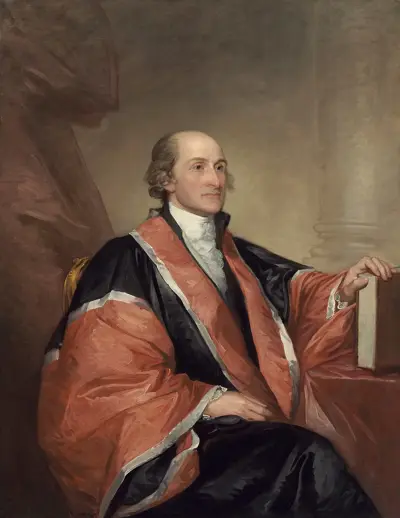
John Jay was an American statesman, patriot, diplomat, Founding Father, abolitionist, negotiator, and signatory of the Treaty of Paris of 1783. He served as the second Governor of New York and the first Chief Justice of the United States (1789–1795). He directed U.S. foreign policy for much of the 1780s and was an important leader of the Federalist Party after the ratification of the United States Constitution in 1788.
