Mohammed Arkoun Quotes
...it is time [for Islam] to assume, along with all of the great cultural traditions, the modern risks of scientific knowledge.
Arkoun, Mohammed. Rethinking Islam: Common Questions, Uncommon Answers. Translated by Robert D. Lee, Westview Press, 1994.


This was a radical speech for the time, suggesting reforms that had been unthinkable to most Turks. Although it is not prohibited by the Koran and early Islamic artists made some of the greatest paintings and depictions of people, fundamentalists gained control of Islam and interpreted any statue as an idol that could be worshipped and this generalized to Islamic art in general where people ceased to be depicted and even animal depictions were rare. Muslim art developed incredible geometric intricacy but tended not to depict anything that is real. This extended to photography and illustrations in books including textbooks. At the same time, not unlike some Christian and Jewish Fundamentalists, the Muslim fundamentalists opposed science and the teaching thereof on the grounds that all authentic knowledge was in the Koran and anything else was not only false but also heretical. So this speech was a type of “declaration of war” against the established religious order and culture.


The Iranian religious theocrat of Iran sees the issue as one where the United States is trying to keep nuclear technology from Iran and other Islamic countries. He seems to discount his own often uttered calls for “death to America” and the statements of intended war with the United States by the leading military officer of Iran. See {624408}.


He was out of office and speaking as an individual. The then President was spewing hate and barbaric fundamentalism which represented the views of the Mullahs who control Iran. (The President has very little power and he can be overridden by the religious authorities whenever those authorities feel that Islam is being compromised.


The changes he wrought were many and profound and were rejected years later when his party was voted out of office so markedly that the only retained 2 seats in the parliament and lost their status as an official Canadian party.


First Muslim to win the Nobel Prize


10 centuries ago was a time when the Arabs were far more advanced and modern than other cultures including the Christian West that was in the Dark Ages. However, in the 12th century there was a “closing”—a narrowing of allowable Islamic thinking, and since then, Islamic people have had great difficulty with change or modernity. Not all Muslim nations are equally rigid but the Arabs are at the extreme among Islamic counties.


He was one of the first Islamic thinker to distinguish between the Koran and the requirements of Islam on the one hand and the traditions of the cultures of the Arabian Peninsula on the other. For example, there is no justification anywhere in Islamic theology for the “Honor Killing” of women; it was a long standing tradition of some of the cultures. But many Muslims and non-Muslims believe that the practice is a part of Islam. There are hundreds of other examples and Abduh tried to eradicate the influence of these traditions. He had traditional and extremist opponents in his lifetime as well as today.


Brazil and Chile are getting close, but his predictions are still in the future.

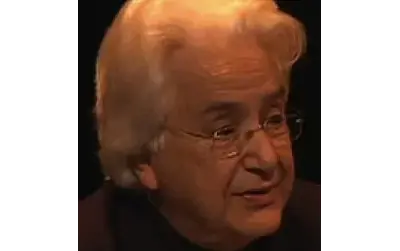
Mohammed Arkoun was an Algerian scholar and thinker. He was considered to have been one of the most influential secular scholars in Islamic studies contributing to contemporary intellectual Islamic reform. In a career of more than 30 years, he had been a critic of the tensions embedded in his field of study, advocating Islamic modernism, secularism, and humanism. During his academic career, he wrote his numerous books mostly in French, and occasionally in English and Arabic. He appeared on numerous occasions on French TV and magazines, on Berbère Télévision speaking in Kabyle, his mother tongue, and on Al Jazeera speaking in Arabic.
