Wilhelm II, German Emperor Quotes
It is the soldier and the army, not parliamentary majorities and decisions, that have welded the German Empire together. I put my trust in the army.
Gauss, Christian. The German Emperor As Shown in His Public Utterances. Charles Scribner's Sons, 1915, p. 55.


Greek invaders were marching on Istanbul


Commenting on the hostilities between the Baltic states and the Russian government:


At that time there were extensive meetings and discussions for the creation of what was to be the United Nations. The negative view of the United Nations or other international security organization is now and always has been held by a vocal minority in the United States.


65 years later, this would become a major principle of conservatives, but it was a liberal President who seemed first to make this statement in a major address.

The Army and the other power centers of the country did not appreciate this idea. He was assinated in a coup 4 year later.


Pippin had the opportunity of expanding his empire by conquering the Lombards whose cavalry he could use if and when the Saracen Muslims would invade again. But he would be seizing another Christian country, contrary to the Pope’s edicts, thus losing the blessings of the Pope. Hence the question. He decided to go for the cavalry. Later, Joseph Stalin asked the same question in much different context. See {627524}. Some historians question whether Pippen actually uttered the quotation or just considered it.


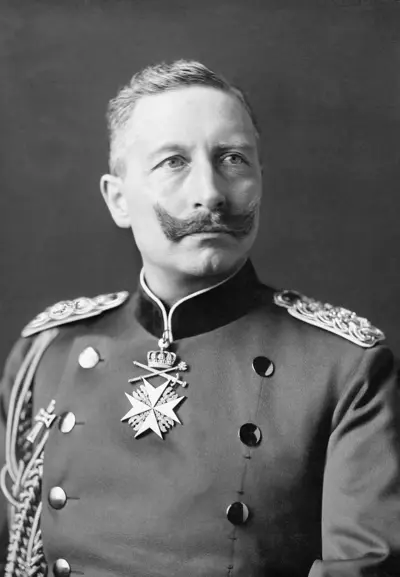
Wilhelm II, anglicised as William II, was the last German Emperor (Kaiser) and King of Prussia, reigning from 15 June 1888 until his abdication on 9 November 1918. Despite strengthening Germany's position as a great power by building a blue-water navy and promoting scientific innovation, his tactless public statements greatly antagonized the international community and his foreign policy was seen by many as one of the causes for the outbreak of World War I. When the German war effort collapsed after a series of crushing defeats on the Western Front in 1918, he was forced to abdicate, thereby bringing an end to the three-hundred-year rule of the House of Hohenzollern.
