Maxim Gorky Quotes
It is quiet here and restful and the air is delicious. There are gardens everywhere and police spies lie in the bushes. There are nightingales in every garden, but police spies only in mine, I think. They sit under my windows in the darkness of the night and try to get a glimpse of how I spread sedition in Russia.
Gorky, Maxim. Maxim Gorky: Letters. Translated by V. Dutt, Progress Publishers, 1966.


In 1937 four nationalist army columns were converging on Madrid in the Spanish Civil War. General Mola was asked which column would take Madrid. His reference to the sympathizers inside the city became a universal term for traitors.


Kennedy was not being literal, but was sarcastically joking about the overemphasis that J. Edgar Hoover and the FBI leadership was placing on investigating civil rights leaders and communists instead of investigating the hundreds of Southern murders and assaults on civil rights workers and organized crime. The FBI leadership was itself quite racist at the time, and Hoover never wanted to take on organized crime. He did not regard organized crime as an existential threat to the United States (the way he did about civil rights demonstrations) and he feared that with the big money available to organized crime, many of his agents would be corrupted.


He advocated no cooperation with the British Colonial Administration which depended on Indian officials, administrators, clerks and other workers. The boycott strategy never worked in this case, but civil disobedience did. Boycott did work against the apartheid regime in South Africa a half century later however.

Magruder and his boss OSS Director Donovan did not believe that the military services, the State Department nor the FBI could or should properly be breaking the laws of foreign nations which would be virtually certain if one was spying in foreign nations. They advocated the formal extension of a the wartime OSS which became the CIA. Magruder convinced Secretary Lovett and this was important in establishing a CIA successor to the OSS.

He was referring to the testimony given before the Senate of James R. Clapper, U. S. Director of National Intelligence. He denied that the NSA was collecting data on millions of American communications. Then Edward Snowden revealed that the NSA was capturing data on ALL U. S. phone calls and e-mails. See {634917} for details on the false testimony.


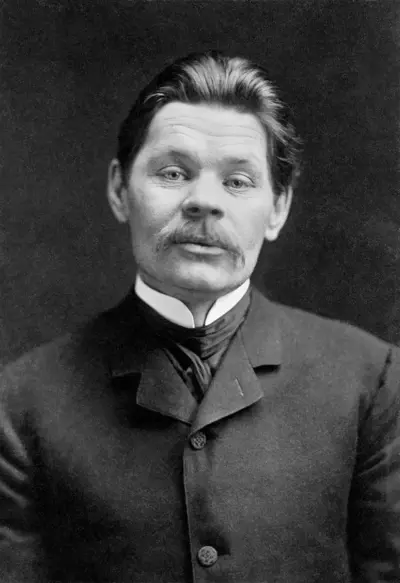
Alexei Maximovich Peshkov, primarily known as Maxim Gorky (Russian: Макси́м Го́рький), was a Russian and Soviet writer, a founder of the socialist realism literary method, and a political activist. He was also a five-time nominee for the Nobel Prize in Literature. Prior to his renown as an author, he frequently changed jobs and roamed across the Russian Empire; these experiences would later influence his writing. Gorky's most famous works were The Lower Depths (1902), Twenty-six Men and a Girl (1899), The Song of the Stormy Petrel (1901), My Childhood (1913–1914), Mother (1906), Summerfolk (1904) and Children of the Sun (1905). He had associations with fellow Russian writers Leo Tolstoy and Anton Chekhov; Gorky would later mention them in his memoirs.
