Robert Kennedy Quotes
There are more FBI undercover agents in the ranks of the Communist Party than there were actual communists.
Kennedy was not being literal, but was sarcastically joking about the overemphasis that J. Edgar Hoover and the FBI leadership was placing on investigating civil rights leaders and communists instead of investigating the hundreds of Southern murders and assaults on civil rights workers and organized crime. The FBI leadership was itself quite racist at the time, and Hoover never wanted to take on organized crime. He did not regard organized crime as an existential threat to the United States (the way he did about civil rights demonstrations) and he feared that with the big money available to organized crime, many of his agents would be corrupted.
Robert F. Kennedy, 1925-1968, U.S. Senator (Democrat, NY), U.S. Attorney General, Quoted in Nick Kotz, Judgment Day
Sourced by: Eigen's Political and Historical Quotations


Jones constantly told King and other associates that the FBI was tapping their telephone conversations. Senator Joseph McCarthy was a right wing paranoid who imagined communists throughout the government. Jones turned out to be right. During that period, the height of the Civil Rights Movement, the FBI was listening, recording, and transcribing, every single phone call to or from King including the conference calls and calls with his attorney. FBI Director received frequent briefings on what King and his associates were doing. Although he ordered the wiretaps, it was Robert F. Kennedy, then the Attorney General, who had to approve them.


Douglas’ sarcastic dissent in the California Bankers Association case:


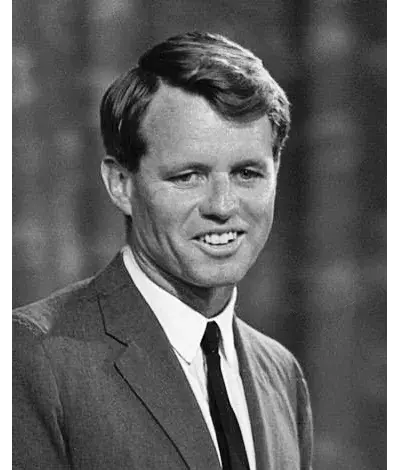
Robert Francis Kennedy, also referred to by his initials RFK or by the nickname Bobby, was an American politician and lawyer who served as the 64th United States Attorney General from January 1961 to September 1964, and as a U.S. Senator from New York from January 1965 until his assassination in June 1968. He was, like his brothers John and Edward, a prominent member of the Democratic Party and has come to be viewed by some historians as an icon of modern American liberalism.
