Lionel of Antwerp, 1st Duke of Clarence Quotes
It Is ordained and established that no alliance by marriage, fostering of children, concubinage or sexual liaison or in any other manner be made between English and Irish …. Every Englishman [must] use the English language and be called by an English name, abandoning completely the Irish method of naming and that every Englishman use English style in appearance, riding and dress …. No house of religion which is situated among the English shall in the future receive any Irishman to their profession.
Could not be priests, friars, or deacons. In addition, Englishmen were prohibited from playing hurling, a wonderful Irish type of rough field hockey which is still the traditional Irish sport but played only in Ireland and New York (by the Irish immigrants). The Irish were considered an inferior culture and race in the concept of the time. See {639438}. The similarity of the prejudice of the English against the Irish parallels very closely that or the Southern American whites against the Negroes.
Lionel, Duke of Clarence, English Lord Lieutenant (Governor) of Ireland, 2nd Son of The English King Edward III, Law Promulgated in Ireland, 1366
Sourced by: Eigen's Political and Historical Quotations

This was the at the time, a typical assessment of the English, Welsh and Scotts about the Irish who were perceived as a lower class of nation. Most interesting was the irreligious perception of a people who would become the most faithful and orthodox of Roman Catholics.

The King was concerned because many of the English living in Ireland were “going native” and he also thought that if the Irish could become more civilized they could be assimilated instead of having to control them with expensive troops. To some extent this actually worked, especially in speaking English, but the entire law was very difficult to enforce. It did however, keep the Englishmen from departing from English dress, speech and household arrangements.

Description of the Dutch Reformed Church in South Africa in the 1730’s

It was not until 1780 that Catholics were allowed to even be members of Town Corporations.


Racial intermarriage was quite common in Colonial America. Virginia passed this law—the first of many in Virginia to try and eliminate miscegenation—which they never did.

Islam and Sharia do NOT require women to wear burkas or headscarves. The religious requirement is for women to dress modestly. The scarves and burkas are cultural customs which differ from place to place. However, in many places, the customs are so ingrained along with islam that many Muslims believe these forms of dress are required by their religion.
The terrible discriminatory practice of forcing minorities to dress differently and distinctively so as to be easily identified for abuse, cruelty, violence and the withholding of civility and benefits was formalized by the Council as applying to Muslims and Jews. Germany imposed a the wearing of a yellow star at the beginning of the Holocaust based on the religious justification if the Council and this quotation. Similar practices were engaged in by Christian and Islamic rulers, but this was the first time that an entire religion formalized the practice as a part of its religious doctrine.

Many Protestant Englishmen were shocked to hear this, having little familiarity with the details of the functioning of the Church of England—the Established Church of Great Britain—in Ireland and the contribution of the Church to the discrimination against Irish Catholics and the poverty of Ireland.


This classic quotation illustrates several things. First, the degree of racism that existed in 1944 in West Virginia. Second, not how young Robert Byrd immediately leaped from the possibility of integrating our fighting forces to interracial sex. That has been typical of white racism in America—a preoccupation with race and sex. Last, Byrd who became a member of the KKK, completely changed his mind over the year and ended up supporting the things that, as a youth were worse than the demise of the nation. He matured and grew on the race issue as much of the country did and ended as a strong supporter of equality and civil rights—including affirmative action.

Prime Minister William Pitt, Edmond Burke, and Irish Patriot Henry Grattan had met with the king to discuss granting Irish Catholics rights to participate in government. The King was quite bigoted against Catholics, but England was at war on the continent and if Irish Catholics were angry enough, they might conspire with the Catholic French for an invasion of Ireland. When the Protestant members of the Dublin Corporation heard about the meeting, they immediately issued their own resolution to the King recommending the continued discrimination against Catholics. In a huge political battle in the English Parliament, Pitt and Burke were able to make some progress. The Penal Laws against Catholics that had been in force for a century were repealed. And Catholic men in Ireland were given the right to vote for members of the Irish Parliament. However, the Conservative Protestants blocked further reforms and Catholics were still not allowed to sit in Parliament of hold public office. Between this quotation and {639274} we see the Irish Protestants somewhat divided with the liberals wanting to give Catholics political equality and the Conservatives opposed.

The founders were all Irish Protestants. Yet in their initial charter, they called for proportional representation of Roman-Catholics. Not all the relations between Irish Catholic and Protestants were hostile. There was a commonality in their Irish nationality and many protestants—especially the educated and more sophisticated—were opposed to the restrictions imposed by England on the rights of the Roman Catholic to practice their religion or participate in government. See {639279} for another example.

Protestant ascendancy was the policy of keeping Protestants dominant while allowing Catholics to worship but to be politically, socially, and economically subservient to the Protestants.

He even paraphrased it in one of his opinions.


There had been terrible religious wars between Catholics and Protestants in English history. The Protestants finally won and the Anglican Church of England became the “official” state church, but as England became a Democracy the power of the prelates and the church receded. However, there were fears of Catholic politicians in England that they were “controlled by the Pope” and if Catholics were too heavily part of the political system, the Pope might control and dominate English policy. Inge, one of the highest ranking Anglican clerics, allayed this fear, not by denying that the Popes and the Vatican might be interested in gaining more influence in England, but by appealing to the independence of the average Englishman and diminishing the spectre of the Pope by referring to him as an “Italian Priest.” As Inge and other high ranking Anglicans were in the English power system only English Priests. Inge at the time saw the Roman Catholic Church as a narrow, intolerant, monolithic anti modern institution. See {615671}. He argued that fear was inappropriate not because of the nature pf the Roman Church, but because of the characteristics of Englishmen, American Protestants had similar fears and Al Smith was defeated as President mainly because he was Catholic. For all but the worst religious bigots, this fear ended in America with the election of JFK.

This quotation became a very polarizing stimulus in the country with anti-immigration people using it in support of their program to restrict immigration and with liberals and Hispanic groups who saw the quotation as a discriminatory unfounded charge.

The problem was that the British had adopted an Indian Civil Service system and instituted an educational system to train Indians. The Hindus attended the schools and did very well on the examinations. The Muslims, however, resisted the secular education, and most of their young men could not pass the examinations. See {616924} & {616925}.
See {617160} for a similar legal opinion. The concern was that poor Muslims may desert their faith when they see how well-dressed the tolerated people, Christians and Jews, are. They might conclude that Christianity or Judaism is better at making people wealthy than was Islam. See {617162} for a Koranic support of the idea. The Western view of this is generally, that is what the marketplace of ideas is all about. In 21st century America, Jews and Mormons on the average were the wealthiest religious groups. The logic of al-Ramli is that Mormons and Jews—each only 6 percent of the population—should not be allowed to show their wealth, lest Roman Catholics for example—25 percent of the population—will convert from Catholicism to the other two religions. From a democratic point of view, the response should be, we so be it. That is their choice. But America is the living proof that the assumption of conversion and loss of faith is per se wrong. The Mormons and Jews are visibly more successful, yet there are very few Roman Catholics leaving their church and converting to the two wealthier religions. There are some, but not at any greater rate than people convert from “wealthier” religions.
See {617157} for a similar legal opinion. The concern was that poor Muslims may desert their faith when they see how well housed the tolerated people, Christians and Jews, are. They might conclude that Christianity or Judaism is better at making people wealthy than was Islam. See {617162} for a Koranic support of the idea. The Western view of this is generally, that is what the marketplace of ideas is all about. In 21st century America, Jews and Mormons on the average were the wealthiest religious groups. The logic of al-Ramli is that Mormons and Jews—each only 6 percent of the population—should not be allowed to show their wealth, lest Roman Catholics for example—25 percent of the population—will convert from Catholicism to the other two religions. From a democratic point of view, the response should be, we so be it. That is their choice. But America is the living proof that the assumption of conversion and loss of faith is per se wrong. The Mormons and Jews are visibly more successful, yet there are very few Roman Catholics leaving their church and converting to the two wealthier religions. There are some, but not at any greater rate than people convert from “wealthier” religions.

In this extraordinary act, the people who are persecuted are made to pay extra taxes to facilitate their persecution
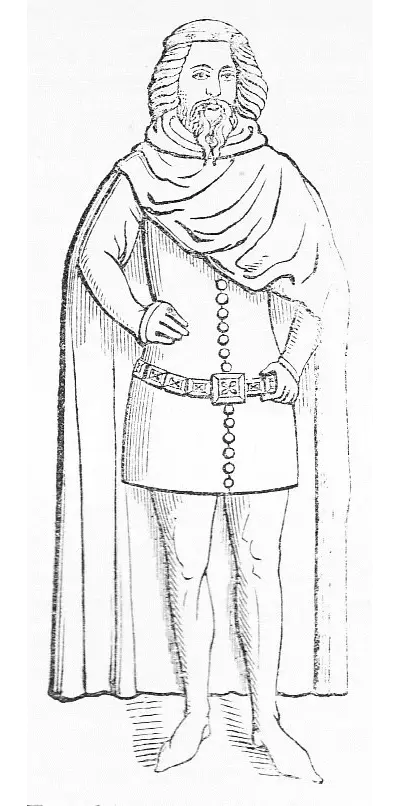
- Born: November 29, 1338
- Died: October 17, 1368
- Nationality:
- Profession:
Lionel of Antwerp, 1st Duke of Clarence, KG was the third son, but the second son to survive infancy, of the English king Edward III and Philippa of Hainault. He was named after his birthplace, at Antwerp in the Duchy of Brabant. Lionel was born of a Flemish mother and was a grandson of William I, Count of Hainaut. He grew to be nearly seven feet in height and had an athletic build.
