John Hunt Morgan Quotes
It is made the duty of every Commanding Officer in the Department, to arrest and send to these Headquarters, under guard, every officer or soldier who may be found absent from his command, without the regular leave in writing, prescribed by Regulations and General Orders.
Morgan, John Hunt. "General Orders." The War of the Rebellion: A Compilation of the Official Records of the Union and Confederate Armies, series 1, vol. 39, pt. 2, Government Printing Office, 1880-1901.


Kleinst, one of the guilty war criminals, is here quoted with the defense that most Nazi war criminals uses—namely that they were obeying orders. But international law makes no distinction between military and political orders, and it is the obligation of a soldier to refuse to obey an illegal military order and the orders he obeyed were illegal and contrary to International law—an order to kill babies and young children can never be legal for example.


He was convicted as a War Criminal, sentenced to death, and then his sentence was commuted to life imprisonment. His quote is important because this was the defense that was totally rejected by the Nuremberg Tribunal—a solder is not required to obey an order to commit a war crime and if he does, he is as guilty as the person who gave the order.


Lawrence of Arabia

History is replete with instances of military coups. In the final analysis, in every country at all times, there is no force in a society that could cope with a military which decides to act on its own. The Founding Fathers were very conscious of this reality and history, hence the firm civilian control of the military in America.

Miles, a hero of the Indian Campaigns (although he led the atrocities at the massacre at Wounded Knee) and then the leading military figure in America was an opponent of the policies of the new young President and had political aspirations of his own for the Presidency. Miles’ opinions were printed in the press. He maintained that he was not speaking as the Commanding General of the Army but personally as a citizen. The President surprised almost all by publicly scolding and reprimanding Miles when he next came to the White House. Five days later Roosevelt made the reprimand official, effectively ending Miles career. The issue of when senior military officers can criticize the administration has been debated ever since. Roosevelt was also a war hero himself, and although the military was shocked by such “savage” treatment of a senior officer, the President had public opinion on his side. Every decade or so there is a military official who does not care for the administration’s policies and expresses himself publicly. President Truman’s firing to General Douglas Macarthur was the most dramatic case, but Truman was well aware of the Miles and TR precedent.

Restorer of Civilian Democracy to Brazil. His reticence to comment publicly on anything brought him the appellation, “Minister of Silence.”

Rush ran the hospitals for the Revolutionary Army and talked to many officers and enlisted men, and also observed much of the British military practices. These suggestions were discussed but never passed as regulations. They are fascinating insights into the problems of the general officers of the time who were generally selected for their socioeconomic status rather than other qualifications. Note the drunkenness limitation for a commanding general was proposed to be limited to only 1 allowed bout of drunkenness every 24 hours. It was, he thought, totally unrealistic to require generals to be always sober when on duty. With the mediocre quality of senior officers, Washington had to depend on foreigners like Lafayette, Von Steuben and others. And Generals who were leading attacks out in front of their men like Benedict Arnold immediately became heroes and one of the reasons he ended up as a traitor was that he thought that he was badly treated relative to the “society” Generals who would not accept him and denigrated his exploits when they themselves had never been close to a battle front.


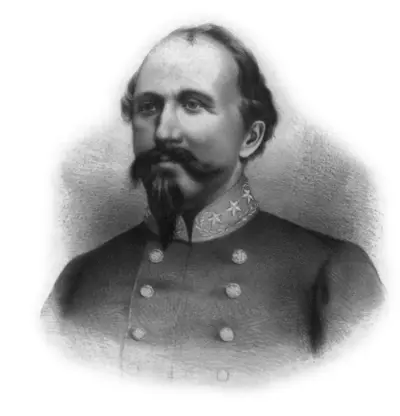
John H. Morgan was a Confederate general in the American Civil War.
