John Prine Quotes
In the Army, I was very good at avoiding my job!
Prine, John. John Prine Beyond Words. Oh Boy Records, 2017.


Miles, a hero of the Indian Campaigns (although he led the atrocities at the massacre at Wounded Knee) and then the leading military figure in America was an opponent of the policies of the new young President and had political aspirations of his own for the Presidency. Miles’ opinions were printed in the press. He maintained that he was not speaking as the Commanding General of the Army but personally as a citizen. The President surprised almost all by publicly scolding and reprimanding Miles when he next came to the White House. Five days later Roosevelt made the reprimand official, effectively ending Miles career. The issue of when senior military officers can criticize the administration has been debated ever since. Roosevelt was also a war hero himself, and although the military was shocked by such “savage” treatment of a senior officer, the President had public opinion on his side. Every decade or so there is a military official who does not care for the administration’s policies and expresses himself publicly. President Truman’s firing to General Douglas Macarthur was the most dramatic case, but Truman was well aware of the Miles and TR precedent.

Lawrence of Arabia

His statement was on the issuance of Executive Order 9981 which outlawed military segregation and granted equal treatment and opportunity to all service members regardless of their race:


In the Iraq and Afghanistan Wars, private contractors wlere hired to provide many services in the war zone including intelligence, security and guard service. In carrying out their responsibilities, some private contractor employees killed and/or tortured suspects or innocent bystandarders against the laws of the United States. If American soldiers had committed these crimes, they would be court marshalled. However, the Code of Military Regulations and other laws applied only to armed forces personnel.


There was no probable cause required at the time and the military intelligence people routinely opened all mail and read it. Most people did not object as the intensity of winning World War II so great that most people put up with almost anything provided it was done in good faith to further the war effort.

Rush ran the hospitals for the Revolutionary Army and talked to many officers and enlisted men, and also observed much of the British military practices. These suggestions were discussed but never passed as regulations. They are fascinating insights into the problems of the general officers of the time who were generally selected for their socioeconomic status rather than other qualifications. Note the drunkenness limitation for a commanding general was proposed to be limited to only 1 allowed bout of drunkenness every 24 hours. It was, he thought, totally unrealistic to require generals to be always sober when on duty. With the mediocre quality of senior officers, Washington had to depend on foreigners like Lafayette, Von Steuben and others. And Generals who were leading attacks out in front of their men like Benedict Arnold immediately became heroes and one of the reasons he ended up as a traitor was that he thought that he was badly treated relative to the “society” Generals who would not accept him and denigrated his exploits when they themselves had never been close to a battle front.


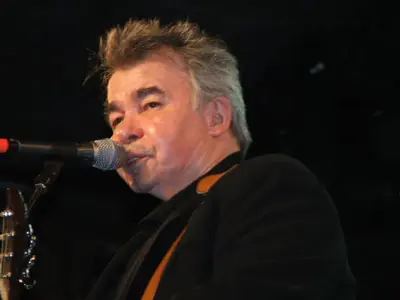
John Edward Prine was an American country folk singer-songwriter. He was active as a composer, recording artist, live performer, and occasional actor from the early 1970s until his death, and was known for an often humorous style of original music that has elements of protest and social commentary.
