John Mitchel Quotes
It is easier to come to a meeting provided with rotten eggs than with sound arguments
Their opponents were trying to break up their public meetings.
John Mitchel, 1815-1874, Irish Journalist & Founder of United Irishman, Founder of The Irish Confederation, Quoted in Timothy Daniel Sullivan, Recollections of Troubled Times in Irish Politics, 1905
Sourced by: Eigen's Political and Historical Quotations


The loyalty and sometimes hypocrisy that is often called for by political parties tends to be offensive to people of serious thought and intellect. However, America has developed two major political parties which while from time to time tend to lock-step obedience, over time tolerate wide diversity and there are few areas in which there can be a party loyalty test. In nations where there are many parties each can be very well-defined and narrow, while if essentially only two, they must have broad tents in order to win. Thinkers are more comfortable in that kind of party.


He was referring to the Volunteers of Ireland who had politically organized.


O’Reilly claimed that across the United States schools were driving the celebration of Christmas out of the schools and that some schools had forced students to sing Silent Night with new, less religious words. Letterman’s instinct was right. O’Reilly, not known for his carful research of what he stated, had taken a single incident and turned it into a alleged national attack on Christianity.
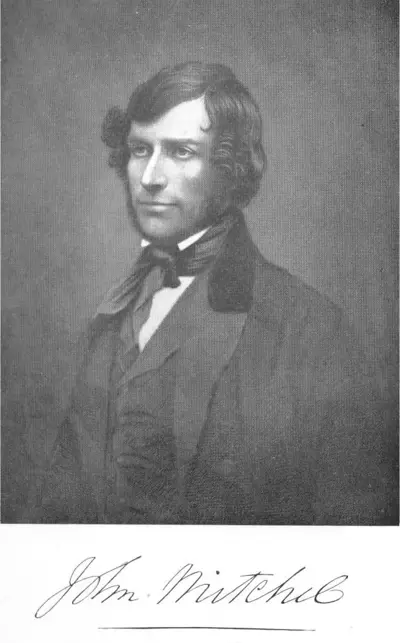
John Mitchel was an Irish nationalist activist, author, and political journalist. In the Famine years of the 1840s he was a leading writer for the Nation produced by the Young Ireland group and their splinter from Daniel O'Connell's Repeal Association, the Irish Confederation. As editor of his own paper, the United Irishman, in 1848 Mitchel was sentenced to 14-years penal transportation, penalty for his advocacy of James Fintan Lalor's programme of co-ordinated resistance to exactions of landlords and to the continued shipment of harvests to England. Controversially for a republican tradition that has viewed Mitchel, in the words of Pádraic Pearse, as a "fierce" and "sublime" apostle of Irish nationalism, in the American exile into which he escaped in 1853, Mitchel was an uncompromising pro-slavery partisan of the Southern secessionist cause. In the year he died, 1875, Mitchel was twice elected to the British Parliament from Tipperary on a platform of Irish Home Rule, tenant rights and free education, and twice denied his seat as a convicted felon.
