JOHN MITCHEL
This fiery statement got Mitchel sent to a penal colony in Australia from which he escaped and came to the United State. It was essentially true. Despite the potato famine in much of Ireland, there was a constant supply of different foods exported from Ireland to England. There were many ways that they Irish could have had food, but they all required some money and there was a massive depression with many Irish out of work and also unable to grow potatoes. The “political philosophy” of the English rulers of Ireland however precluded any kind of welfare, relief or food assistance—see {636214}.
Mitchel was convicted for his writings and deported to New Zealand from which he escaped to the United States where he worked as a journalist before returning to Ireland.
Their opponents were trying to break up their public meetings.
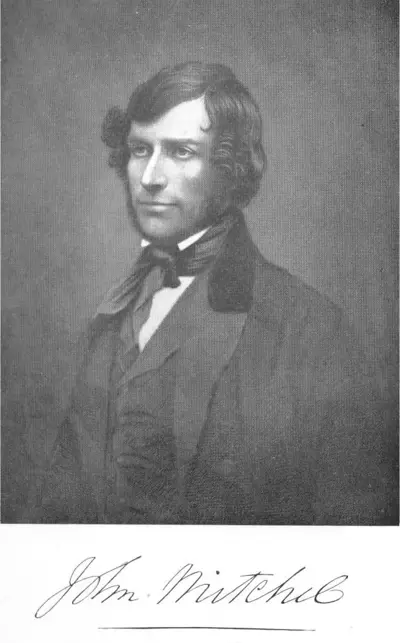
John Mitchel was an Irish nationalist activist, author, and political journalist. In the Famine years of the 1840s he was a leading writer for the Nation produced by the Young Ireland group and their splinter from Daniel O'Connell's Repeal Association, the Irish Confederation. As editor of his own paper, the United Irishman, in 1848 Mitchel was sentenced to 14-years penal transportation, penalty for his advocacy of James Fintan Lalor's programme of co-ordinated resistance to exactions of landlords and to the continued shipment of harvests to England. Controversially for a republican tradition that has viewed Mitchel, in the words of Pádraic Pearse, as a "fierce" and "sublime" apostle of Irish nationalism, in the American exile into which he escaped in 1853, Mitchel was an uncompromising pro-slavery partisan of the Southern secessionist cause. In the year he died, 1875, Mitchel was twice elected to the British Parliament from Tipperary on a platform of Irish Home Rule, tenant rights and free education, and twice denied his seat as a convicted felon.
