Friedrich Nietzsche Quotes
A thinking man can never be a party man.
The loyalty and sometimes hypocrisy that is often called for by political parties tends to be offensive to people of serious thought and intellect. However, America has developed two major political parties which while from time to time tend to lock-step obedience, over time tolerate wide diversity and there are few areas in which there can be a party loyalty test. In nations where there are many parties each can be very well-defined and narrow, while if essentially only two, they must have broad tents in order to win. Thinkers are more comfortable in that kind of party.
Friedrich Nietzsche, 1844-1900, German Philosopher, Quoted in New York Times Magazine, November 26, 2006
Sourced by: Eigen's Political and Historical Quotations


The logical conclusion of the Jeffersonian approach was perhaps best reached by H. L. Mencken: {607257}. This quotation is often used incorrectly to show that Jefferson opposed political parties. While he did in 1789, he changed his position after observing America develop. See {51500} for Jefferson’s later view.

Spinoza was one of the most feared intellectuals in human history—feared that is by the established power structures. He is the only known person who was excommunicated by the Catholics, the Jews and the Muslims—all were forbidden to read his works. He was the enemy of authority and advocated personal reason as the guide for men.
Spinoza was one of the most feared intellectuals in human history—feared that is by the established power structures. He is the only known person who was excommunicated by the Catholics, the Jews and the Muslims—all were forbidden to read his works. He was the enemy of authority and advocated personal reason as the guide for men.


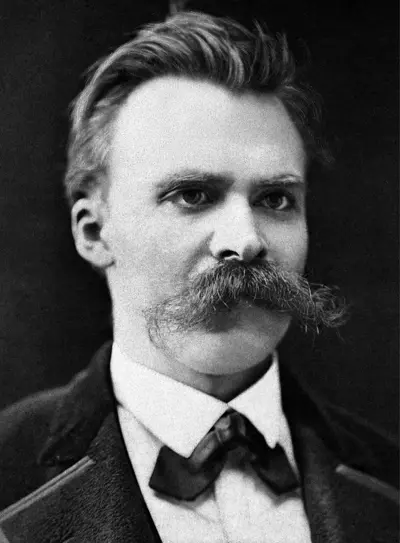
Friedrich Wilhelm Nietzsche was a German philosopher, cultural critic, composer, poet, writer, and philologist whose work has exerted a profound influence on modern intellectual history. He began his career as a classical philologist before turning to philosophy. He became the youngest person ever to hold the Chair of Classical Philology at the University of Basel in 1869 at the age of 24. Nietzsche resigned in 1879 due to health problems that plagued him most of his life; he completed much of his core writing in the following decade. In 1889, at age 44, he suffered a collapse and afterward a complete loss of his mental faculties. He lived his remaining years in the care of his mother until her death in 1897 and then with his sister Elisabeth Förster-Nietzsche. Nietzsche died in 1900.
