Baruch Spinoza Quotes
Free thought is a virtue that cannot be crushed
Spinoza was one of the most feared intellectuals in human history—feared that is by the established power structures. He is the only known person who was excommunicated by the Catholics, the Jews and the Muslims—all were forbidden to read his works. He was the enemy of authority and advocated personal reason as the guide for men.
Benedict Spinoza, 1632-1677, Dutch Philosopher, Tractatus Politicus, 1677
Sourced by: Eigen's Political and Historical Quotations


The loyalty and sometimes hypocrisy that is often called for by political parties tends to be offensive to people of serious thought and intellect. However, America has developed two major political parties which while from time to time tend to lock-step obedience, over time tolerate wide diversity and there are few areas in which there can be a party loyalty test. In nations where there are many parties each can be very well-defined and narrow, while if essentially only two, they must have broad tents in order to win. Thinkers are more comfortable in that kind of party.

Spinoza was one of the most feared intellectuals in human history—feared that is by the established power structures. He is the only known person who was excommunicated by the Catholics, the Jews and the Muslims—all were forbidden to read his works. He was the enemy of authority and advocated personal reason as the guide for men.


Ingersoll was considered to be the greatest orator and political thinker of his day, but his overt atheistic views curtailed his elected political career.


See Sidney Hook for a later, similar view: {603761} Ingersoll was considered to be the greatest orator and political thinker of his day, but his overt atheistic views curtailed his elected political career.


Later published under the pseudonym Silence Dogood in the New England Courant, July 9, 1722. Cato originated the quotation in Ancient Rome. A millennium later, Ben Franklin picked it up and made it and made it very popular. Note that it was very common in early America for publishers and writers to copy materials from others and publish them under their own name. America was a major intellectual property pirate in its early years copying and printing much and rarely giving credit and never paying an author's royalty--not unlike some of the Asian nations today.


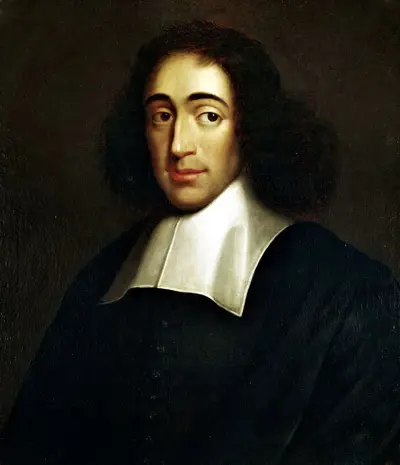
Baruch (de) Spinoza was a Dutch philosopher of Portuguese Sephardi origin. One of the early thinkers of the Enlightenment and modern biblical criticism, including modern conceptions of the self and the universe, he came to be considered one of the great rationalists of 17th-century philosophy. Inspired by the groundbreaking ideas of René Descartes, Spinoza became a leading philosophical figure of the Dutch Golden Age. Spinoza's given name, which means "Blessed", varies among different languages. In the Netherlands he used the Portuguese name Bento. In his Latin and Dutch works, he used Latin: Benedictus de Spinoza.
