Benjamin Graham Quotes
It is a fact worth pondering that four centuries ago the evil of "an abundance or surplus" arose from its being kept off the market, while today the evil of surplus lies in its being thrown upon the market.
Graham, Benjamin. Storage and Stability: A Modern Ever-normal Granary. McGraw-Hill, 1937, p. 30.

The President had a series of radio talks to the people in which he addressed them directly and explained things as he then understood them.


He never actually set foot in Maryland but governed through deputies.


One of his major ideas is that the masses of the industrial monopoly have a great deal of power and can make or break institutions. However, those who see the people as not very empowered distinguish between two types of power. The wealthy capitalist, the politician, the dictator, can exercise power individually and have a profound effect on the society. The average person however has little or no power to alter society individually; he can only exercise his power together with many others. Most of us think of “powerful people” as those who can exercise their power unilaterally. Mises observes that the masses, acting in concert, can overpower the unilateral powers, and therefore regards the people as the dominant power.

This is the equivalent of “if you build it, they will come.” This is one of those so called “Law” of economics that is really not always so. In many cases it holds, as when Disney Built Disney World or Apple issued the iPhone. However, it clearly does not hold when there is a surplus of a commodity.

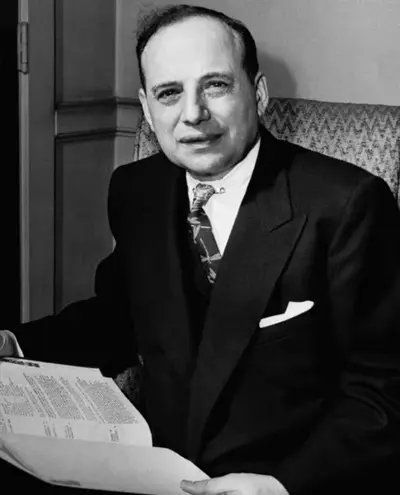
Benjamin Graham was a British-born American economist, professor and investor. He is widely known as the "father of value investing", and wrote two of the founding texts in neoclassical investing: Security Analysis (1934) with David Dodd, and The Intelligent Investor (1949). His investment philosophy stressed investor psychology, minimal debt, buy-and-hold investing, fundamental analysis, concentrated diversification, buying within the margin of safety, activist investing, and contrarian mindsets.
