Ludwig von Mises Quotes
Those underlings who in all the preceding ages of history had formed the herds of slaves and serfs, of paupers and beggars, became the buying public, for whose favor the businessmen canvass. They are the customers who are “always right,” the patrons who have the power to make poor suppliers rich and rich suppliers poor.
One of his major ideas is that the masses of the industrial monopoly have a great deal of power and can make or break institutions. However, those who see the people as not very empowered distinguish between two types of power. The wealthy capitalist, the politician, the dictator, can exercise power individually and have a profound effect on the society. The average person however has little or no power to alter society individually; he can only exercise his power together with many others. Most of us think of “powerful people” as those who can exercise their power unilaterally. Mises observes that the masses, acting in concert, can overpower the unilateral powers, and therefore regards the people as the dominant power.
Ludwig von Mises, 1881-1973, Austrian Economist & Political Philosopher, The Anti-Capitalistic Mentality, 1954
Sourced by: Eigen's Political and Historical Quotations


The first quotation was made shortly after the launching of The Clarion in 1891. The newspaper was relatively successful but while England moved more to the left, socialism was not embraced by Englishmen. Later, Blachford concluded that the conversion would not likely take place soon.


Ardent socialists make the same complaint—that critics often compare realistic socialist societies with capitalist utopias, and they conclude when reality is considered, socialism is the better system.


Salisbury was a brilliant, effective prime minister, but he was a snob and not a democrat. See {639131}.

This was one of the statements that he was jailed for during WWI.

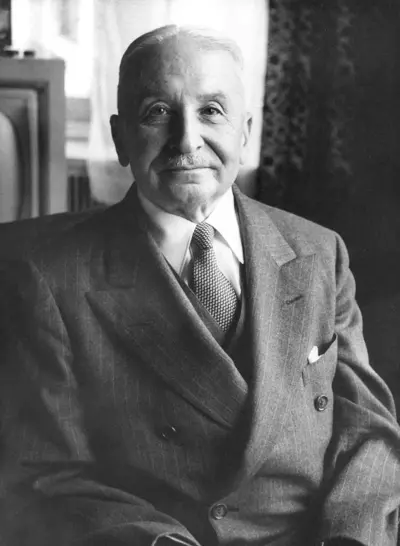
Ludwig Heinrich Edler von Mises was an Austrian School economist, historian, logician and sociologist. Mises wrote and lectured extensively on the societal contributions of classical liberalism. He is best known for his work on praxeology, a study of human choice and action.
