Hjalmar Schacht Quotes
And this thesis is somewhat connected with general social and political observations, because it establishes the fact that the number of consumers is considerably larger than the number of producers, a fact which exercises a not inconsiderable social and political pressure.
Schacht, Hjalmar. The End of Reparations. Translated by Lewis Gannett, Jonathan Cape & Harrison Smith, 1931.


One of his major ideas is that the masses of the industrial monopoly have a great deal of power and can make or break institutions. However, those who see the people as not very empowered distinguish between two types of power. The wealthy capitalist, the politician, the dictator, can exercise power individually and have a profound effect on the society. The average person however has little or no power to alter society individually; he can only exercise his power together with many others. Most of us think of “powerful people” as those who can exercise their power unilaterally. Mises observes that the masses, acting in concert, can overpower the unilateral powers, and therefore regards the people as the dominant power.

Salisbury was a brilliant, effective prime minister, but he was a snob and not a democrat. See {639131}.


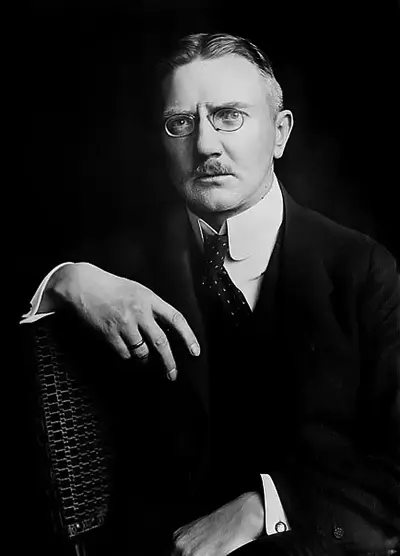
Hjalmar Schacht was a German economist, banker, centre-right politician, and co-founder in 1918 of the German Democratic Party. He served as the Currency Commissioner and President of the Reichsbank under the Weimar Republic. He was a fierce critic of his country's post-World War I reparation obligations.
