Satish Kumar Quotes
It became extremely important that we go and see the four heads of the governments, and the message was delivered, with the tea packets, to all these heads.
Kumar, Satish. "Journey of an Earth Pilgrim: Conversation with Satish Kumar." Interview by Harry Kreisler. Conversations with History, Institute of International Studies, UC Berkeley, 13 Nov. 2003.


The “fool” was Neville Chamberlain, 1869-1940, the British Prime Minister who refused to stand up to Hitler and instead negotiated a peace pact, returned home declaring that he had preserved peace. (See {585941}.) Then Hitler invaded more of Europe and WWII was begun. Ford was a Hitler admirer and pro-German (Hitler supported him for the American Presidency--{586988}—and awarded him a medal) but he thought that England had bungled the negotiations by sending someone who was very weak. In this sense his views were the same as most who were anti-Hitler.


Holland was then a Republic and federation of the separate states. Each elected representatives to the ruling legislature, however, many states had not been pleased that their representatives did not reflect the desires and public opinion in the individual states and in some cases took bribes to vote in favor of special interests. The Dutch did NOT want their representatives to use their own judgment but wanted them to seek and follow the instructions of the legislatures of each state.


India & Pakistan have been in dispute over Kashmir and other issues ever since Pakistan’s creation. Pakistan has started sever wars, and though she has lost them, India has never invaded Pakistan. Each side has been trying to get the United States to support its position and pressure the other side. When they started an arms race and both sides started to develop nuclear weapons, the reality was that the United States pressured both sides on the nuclear proliferation issue. No nation wants to admit that it has been pressured to arrive at any position. So the diplomatic thing for those nations who apply diplomatic pressure on other nations is to deny that they are trying to pressure the party which they are trying to pressure. This makes it easier for the pressure to work.


Her experience in the United Nations made her realize that most of the foreign policies of the more powerful and sophisticated countries were stated in such complex, nuanced, and politically coded language, that most of the literate and educated people in many countries could not understand them. This was, and is today, often true of many government officials around the world.


Samuel Langhorne Clemens, 1835-1910. Ambassadors were often given title of Minister in those days.


Samuel Langhorne Clemens, 1835-1910

Meiji the Great. This was a momentous event in Japanese history. This was the first time that the Japanese Emperor had appointed diplomats to conduct foreign affairs. Prior to that, Japan was so isolationist that at times Japanese who had any contact with Westerners would be executed. Then the Emperor had a reception for foreign diplomats. Never before in the history of the Empire had its divine head deigned to admit to his presence the despised foreigner. The Emperor was only in his second year of rule at the time.


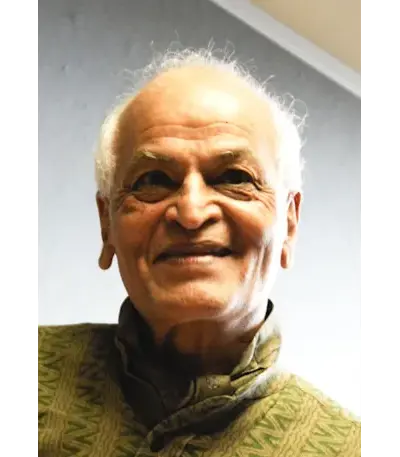
Satish Kumar is an Indian British activist and speaker. He has been a Jain monk, nuclear disarmament advocate and pacifist. Now living in England, Kumar is founder and Director of Programmes of the Schumacher College international centre for ecological studies, and is Editor Emeritus of Resurgence & Ecologist magazine. His most notable accomplishment is the completion, together with a companion, E. P. Menon, of a peace walk of over 8,000 miles in 1973–4, from New Delhi to Moscow, Paris, London, and Washington, D.C., the capitals of the world's earliest nuclear-armed countries. He insists that reverence for nature should be at the heart of every political and social debate.
