Narendra Modi Quotes
In foreign policy it's not necessary to have similar views to have a conversation.
Modi, Narendra. Interview by Fareed Zakaria. Time, Time USA, LLC, 7 May 2015.


For a leader of a hostile foreign power, this is as complementary a description as there is.


The basic treaty sold some of Ethiopia’s colonial territory (Eritrea and Tigray) to Italy in exchange for arms. Italy had tried to conquer the area but lost 500 men in the Battle of Dogali. However, after this peace treaty, Italy maintained that Article 17 of the treaty gave them the right to declare Ethiopia an Italian Protectorate which they did. However, there were two different versions of the treaty that the Italians had drawn up—one in Italian, the other in Aramaic. Britain, Belgium and Germany supported Italy; France, Turkey and Russia supported Ethiopia. Menelik then, to make matters clear, repudiated the treaty in 1893. Italy send an invasion force that was soundly thrashed by the Ethiopians setting the stage for the Italian attack on Ethiopia in World War II years later. Parties to International treaties thereafter have paid close attention to the different language versions.

The meeting between Neville Chamberlain and Adolf Hitler in September 1938 marked a marked a change in diplomacy. For one, most diplomacy in the past had been conducted through diplomats and secondly the ability to meet quickly was enhanced through advances in communication and transportation technology.


When there are disputes between nations, sometimes one or both of the countries take the position that the other is so wrong and immoral that to negotiate with them per se gives them a credibility which they do not deserve. So at times one or both of the opponents places preconditions on discussions. Some politicians and governments have had a belief that negotiating with and enemy is a sign of weakness, and the reality is that often the other side characterizes attempts at negotiations as an indicator that they are faring well under the theory that the other side would not negotiate if they didn’t have to. Those governments which have a policy of talking to everyone under any conditions, avoid this dilemma as talks are not a sign of anything but their normal foreign policy.

FDR was not always pro-British as many conservative opponents claimed. He was actually quite suspicious of the British though his concerns evaporated with the crisis of the rise of Hitler and WWII.

Giuliani had designs on the Republican Presidential nomination. However, his professional experience had little to do with foreign affairs or foreign policy. As a moderate, New York Republican, he needed to appeal to the extreme right wing base that could veto a Republican candidate. So he wrote this article and presented very articulate, well expressed versions of, right wing, conservative, ideological principles. This one took the old principles of the British Empire where the King or Queen even talking to or writing a foreign diplomat was a great honor to be reserved for those nations who followed the Empire’s desires. A more pragmatic—more democratic view is that diplomats and leaders should talk to anyone if they might be persuasive in furthering our national interest. Despite his oratorical improvement in right wing ideology, Giuliani could not get any traction with the right wing of his party and gave up his Presidential ambitions for 2012.

Her experience in the United Nations made her realize that most of the foreign policies of the more powerful and sophisticated countries were stated in such complex, nuanced, and politically coded language, that most of the literate and educated people in many countries could not understand them. This was, and is today, often true of many government officials around the world.


to make international treaties or resolve international problems

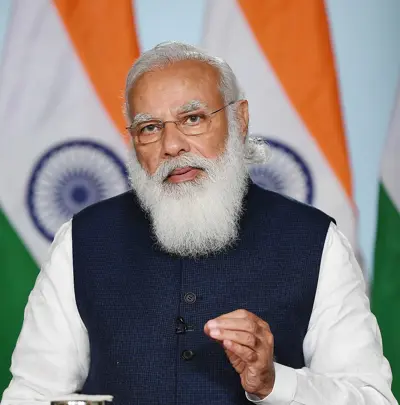
Narendra Damodardas Modi is an Indian politician serving as the 14th and current Prime Minister of India since 2014. He was the Chief Minister of Gujarat from 2001 to 2014 and is the Member of Parliament for Varanasi. Modi is a member of the Bharatiya Janata Party (BJP) and its National Democratic Alliance (NDA). He is also a member of the Rashtriya Swayamsevak Sangh (RSS), a Hindu nationalist volunteer organisation. He is the first prime minister born after India's independence, the second non-Congress one to win two consecutive terms after Atal Bihari Vajpayee and the first from outside the Congress to win both terms with a majority in the Lok Sabha.
