Moshe Sharett Quotes
Israel would not do that, both because we cannot afford to be accused by the world of aggression and because we cannot, for security and social reasons, absorb in our midst a substantial Arab population.
Sharett, Moshe. Yoman Ishi [Personal Diary]. Sifriyat Ma'ariv, 1978. Quoted in Rokach, Livia. Israel's Sacred Terrorism: A Study Based on Moshe Sharett's Personal Diary and Other Documents. Association of Arab-American University Graduates, 1980, p. 18.


After the 6 Day War, Israel was in control of the West Bank.


When whites first came to America, the Iroquois, were the most sophisticated Native Americans. They were actually a confederation of 5 different tribes each of which was composed if many clans. Although fierce warriors, they had agreed not to fight each other and to assist if any were attacked. They developed a strong agricultural base, to go with the fishing and hunting, and their confederation were very aggressive and sophisticated traders taking them far from their upstate New York “capitol.” Their governmental structure was quite sophisticated with an elaborate, formal, system of checks and balances, multi-cameral legislatures that recognized numbers of citizens, power and wealth, and even cultural traditions. They were literate, capitalistic and globalistic in that they wanted to trade with all. They had written laws, and women had a role that was unique in world history in that only women owned property in a matrilineal society. Further, it was only the Clan Mothers who voted for the 50 Sachems (~Senators)—but their selections had to be accepted by the people they represented. Ironically the descendants of the Iroquois who remained in New York became a very successful Native American group. In the 2000 census, the average Indian in New York State earned the same income as the average White with no Indian gambling money.

At the time, Palestine was technically Turkish territory. Turkey was one of the defeated axis powers in World War I. England, as part of the World War I peace treaties, had control over Palestine as well as most of the rest of the Middle East.

This quote is very important historically as it bears on the two different narratives of the creation of Israel given by the Jews and the Arabs. The Arabs claim that in the 1948 partition of Palestine, the Jew attacked the Arabs and drove them out of the areas in which they had lived for years, The Israelis claim that they urged the Arabs to stay and that all those who did, received full citizenship in the new state of Israel. The Arab leaders pressured and in some cases even forced the Arabs to leave so that the Arab armies could use artillery and other war weapons and not have to worry about hitting Arabs. They promised the Arabs who left that they could return in a few days when the Jews were defeated and pushed into the sea, and the Arabs could have the Jewish property. This report of an impartial actor, tends to support the Jewish view of the happening in so far as the behavior of the Jews was concerned. There was no pressure placed on Arabs by Jews to leave. It was actually, the reverse. There were however, two small rural areas where Jewish radicals did try and drive the Arabs out, but in general the Haifa experience was the norm.
A major issue amongst Israeli’s is to how they should relate to those hostile Islamic nations in their area who claim they are at war with Israel or the Jewish People. This position in effect says that the oratory of those Islamic groups that claim that they are in a war—a holy war even—should be taken at their word and treated as a wartime enemy and Israel should actively attempt to kill and destroy them.

Not all the Muslim nations of the Middle East want Israel destroyed. The Kurds and the Turks both maintain relations with Israel. The problem lies with the Arab Nations.


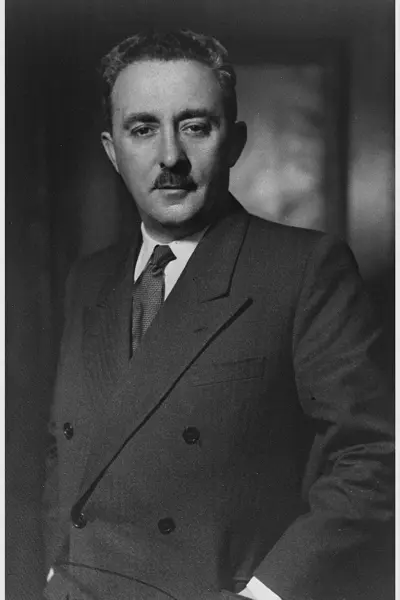
Moshe Sharett was the second Prime Minister of Israel (1954–55), serving for a little under two years between David Ben-Gurion's two terms. He continued as Foreign Minister (1955–56) in the Mapai government.
