Thomas Paine Quotes
Is it not a species of blasphemy to call the New Testament revealed religion, when we see in it such contradictions and absurdities.
Paine, Thomas. The Age of Reason, Part II. H.D. Symonds, 1795, p. 11.

Franklin was a deist. He believed in God and the Creation but not the Bible which is often referred to as “revealed” truth. He did believe that classic Christianity was a positive force as some people were led to good works and a moral life by it.


Al-Maarri’s quotations are not only meaningful in their own right, but they illustrate the openness and free thinking that was allowed in the early days of Islam before about 1100. If anyone wrote such things today in most Islamic countries he would at least be jailed if not executed for blasphemy. And if any Christian in Europe made the same statement, he would have been excommunicated at least if not tortured and murdered.


This view was infuriating to the Rabbis, Priests and Immams of the time. Miracles and Scrip[ture were not determinatve Spinoza taught but the issue was did the docrine of the religion make sense. Spinoza’s ideas were considered so radical and dangerous that he was the only man in history who was excommunicated by the Catholics, the Jews and the Muslims.


This sura is used by moderate Muslims showing that The Prophet was somewhat tolerant of those who even mock the word of Allah. Nonetheless, most fundamentalist Muslims believe that anyone who mocks the word of Allah or His Prophet should be killed. Muhammad said not to sit with them—his modern followers too often call it heresy and want to kill them.


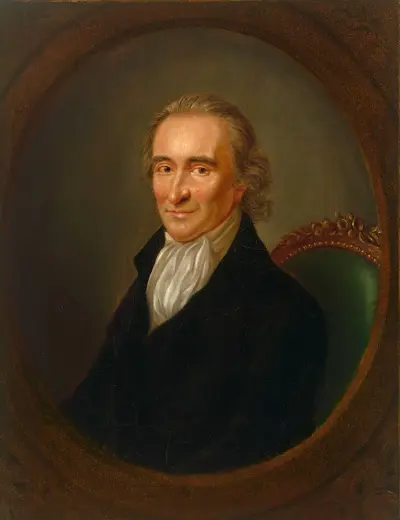
Thomas Paine was an English-born American political activist, philosopher, political theorist, and revolutionary. He authored Common Sense (1776) and The American Crisis (1776–1783), the two most influential pamphlets at the start of the American Revolution, and helped inspire the patriots in 1776 to declare independence from Great Britain. His ideas reflected Enlightenment-era ideals of transnational human rights. Historian Saul K. Padover described him as "a corsetmaker by trade, a journalist by profession, and a propagandist by inclination".
