T. E. Lawrence Quotes
Irregular war is far more intellectual than a bayonet charge.
Lawrence of Arabia
Thomas Edward Lawrence, 1888-1935, English Army Officer, Quoted in Foreign Affairs January / February 2011
Sourced by: Eigen's Political and Historical Quotations


These tactics were revolutionary in China and the rest of the world. They were unexpected and were very effective. The non communists however were corrupt, exploitative, and divided. The communist revolution in China might well have not succeeded had the capitalist forces not been so corrupt and badly led.


See {613496} for the origin of the “thrashing a cannibal” phrase.

This issue of who has the wisdom and competency to determine policy in matters of war has been a constant one in most societies. Even in the Iraq war of the early 21st century, the Congress and the President argued as to what competence the Congress had to determine policy, strategy and tactics.

During WWII, Mauldin was at the front lines and in the fox holes with the troops getting ideas for his cartoons most of which were drawn on the battle field;


Although this may seem obvious to most, there has been, in recent years, an attempt by some to introduce the concept of proportionality into the war equation and definition of war crime. Defense after attack many argue should be proportional to the attack. So if Nation A shoots down a plane of Nation B, according to this logic Nation B is not supposed to invade nation A. Brecher points out the absurdity of the concept from a war point of view. It is however used by many to criticize the defenses against terrorism where modern weapons are used against terrorists and those that harbor them.

of the German tactics of Blitzkrieg Goering, Hitler and the other leading Nazis were quite open about their military aggression. Terrorism was admittedly used to persuade the next nation Germany would attack to capitulate rapidly.

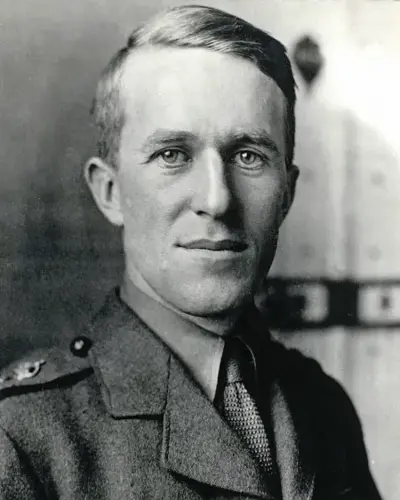
Colonel Thomas Edward Lawrence CB DSO was a British archaeologist, army officer, diplomat, and writer who became renowned for his role in the Arab Revolt (1916–1918) and the Sinai and Palestine Campaign (1915–1918) against the Ottoman Empire during the First World War. The breadth and variety of his activities and associations, and his ability to describe them vividly in writing, earned him international fame as Lawrence of Arabia, a title used for the 1962 film based on his wartime activities.
