Giora Eiland Quotes
In this kind of war a natural gap exists between the expectations of the of the politicians, of the public opinion, of the press and the real capacity of the armed forces to deliver. The gap is a characteristic of this kind of war. The gap is related the four dimensions: To the duration of the war; to the number of casualties; to the damage to the innocent civilians on the other side; and, what is more important, is the solution to the problem of the question of whether or not a decisive victory can or cannot be achieved.
Giora Eiland, General & National Security Advisor of Israel, Lecture on Modern Asymmetric Warfare, Address, Foreign Relations Council Podcast
Sourced by: Eigen's Political and Historical Quotations


Churchill saw before many others that technology and weaponry had changed the nature of warfare. At the time the military leadership of all the major powers were pursuing 19th century tactics with 20th century weaponry including mass bayonet charges against machine guns behind barbed wire. Churchill and other civilians, although they had legal control over the military, had little de facto tactical control. As a politician he became an itinerant meddler in military tactics thereafter.


This was a precursor of the total war views of William Tecumseh Sherman and Ulysses S. Grant during the American Civil War half a century later.

His balanced judgment and concern for American Casualties changed during the Iraq War over a decade later where he insisted on taking steady American casualties even after Saddam had been deposed and American troops were in the middle of a sectarian civil war.

Umezu was one of several members of the Japanese War Council, that did not want to surrender even after the second atomic bomb destroyed Nagasaki. He and the other hard liners were convinced that the Japanese could inflict such heavy casualties on an invading force of the mainland that the Allies would not insist on unconditional surrender and Japan could negotiate favorable terms. These hard liners had already lived through the firebombing of Tokyo which in casualties was as bad as the atom bomb attacks, and felt that they could maintain a defensive force even if all the major cities of Japan were destroyed. Fortunately for all parties, the Emperor overruled Umezu and the hardliners. Umezu and the other hard liners had personal reasons to want to negotiate terms. They had committed war crimes and did not want to be brought to account. He was tried after the surrender and sentenced to life in prison where he died of cancer after 4 years.


Bland was an expert in Asia and spent most of his time writing about Asian Politics. This quote shows that there was hostility and bad feeling between American and Japan long before WWII. This statement was written in 1921. The reality was that Japan was getting stronger as a militaristic expansionist nation which wanted to subjugate most of Asia. Ironically, they were using England and the European powers as models and sought to take Korea, Manchuria and much of Asia as Colonies, but this clashed with American values and even then there was animosity of the two systems.

See {613496} for the origin of the “thrashing a cannibal” phrase.


Ever since the end of WWII, no major war has been fought where there has been a classic victory where one nation is conquered by another and there is a surrender. Many of the wars have been fought against non-state actors or our war aim is a regime change or the establishment of a more friendly government. We have no desire to occupy the countries generally, and there is often no one “in charge” of the enemy who can even surrender. Bruce was referring to the Iraq War and the Afghanistan War. In each case, despite the lack of a surrender document, it can be said that America won both of these wars initially and then had great trouble with the occupation, the nation building, and keeping the peace. In Iraq and Afghanistan we suffered almost no casualties in the initial invasions. The occupation and “peace” is where we suffered almost all of our casualties.
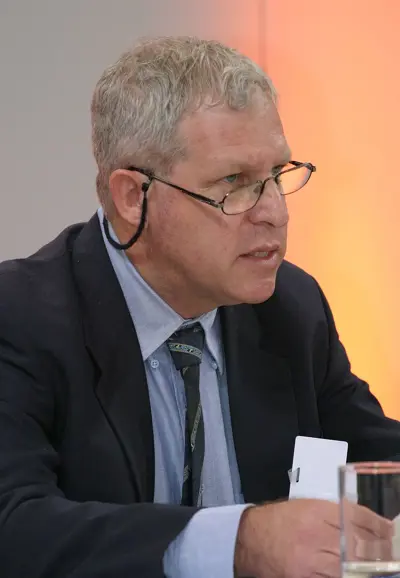
Giora Eiland (Hebrew: גיורא איילנד; born 1952 in moshav Kfar Hess) is Major General (ret.) Israel Defense Forces. Eiland is a former head of the Israeli National Security Council. After his retirement from the public sector, he was a senior research associate at the Institute for National Security Studies (INSS).
