David Halberstam Quotes
Iraq is the wrong war and the wrong time in the wrong place.
David Halberstam, 1934-2007, Journalist & Writer, Quoted Charlie Rose Show, May 21, 2007
Sourced by: Eigen's Political and Historical Quotations


President Bush claimed that he authorized the invasion because Iraq had developed and were about to deploy weapons of mass destruction. After the invasion, there were no such weapons ever found. Some believe Bush had acted on bad intelligence; others argued that Bush and the neocoms had wanted to invade Iraq for other reasons, and used the bad intelligence knowingly and actually suppressed intelligence that contradicted the hypotheis of weapons readiness.


Carter, who had his own share of blunders, may well have been right about this. History will have to judge.

This quotation is a good example of how tolerant some nations can be in terms of maintaining diplomatic relations and trade relations with other countries. The American and English governments chose to simply protest and condemn the slanderous statement but decided that the Prime Minister was pandering to his political local Islamic base, so took no further action and kept open diplomatic relations. Mahathir had a history of being very accusatory of the West with respect to anything that affected the Arab Muslims. The number of Muslims killed by the Americans and British in the Iraq War was very small compared to the huge number of Muslims killed by other Muslims in their Sunni Shiite civil war. While Bush and Blair both generated support for the Iraq invasion by making claims of WMD development in Iraq that were false, it is not clear whether or not they knew their statements were false, should have known that they were false, created an atmosphere against Iraq that was likely to produce false accusations, or were simple misled by poor intelligence. Mahathir, of course, chose to assume the worst case, and claim it was true, which is what many people think Bush and Blair did in analyzing the intelligence on Iraq.


Podharetz was citing the Vietnam war. The two American occasions where the plausibility seemed to fade were the Vietnam War and The Irag war. Both Presidents Lyndon Baines Johnson and George W. Bush as Bismarck predicted, had much political trouble over the wars.

President George W. Bush, to justify the invasion of Iraq had told the public that the Iraqi regime was developing nuclear weapons and other weapons of mass destruction, and had participated in the September 11 attack on the United States by assisting Al Qaeda. It turned out that these statements were false. The administration claimed that their error was well intentioned and the result of faulty intelligence. Opponents claimed that the administration officials knew that they were exaggerating and had pressured the intelligence agencies to create intelligence conclusions that supported their story.

The three leading “hawks” of the administration and the architects of the Iraq War. However, not only had none of them ever been in combat, but none had ever served on active duty in the military. None of the three had been drafted or enlisted during the Vietnam war except for Bush who was accepted into the Texas Air National Guard; parts of his service record has been last, but he never was outside the United States. Murtha, John Kerry, John McCain and many of the administration's critics were all decorated war heroes who had been wounded in action.

The first non-PRI President in over 70 years.


He served Presidents Reagan, Clinton, and both Bushes

Kennen, one of the great American wise men for foreign affairs, could not have predicted the outcome of the Iraq war any better.
In 2002 he thought that President George W. Bush was the fool American. He thought the invasion of Iraq was a terrible idea which was doomed to failure.


Prior to this question, Thomas had not been called on at a White House press conference for 3 years. After it, she was again avoided.

The attack on the World Trade Towers and our military reaction to that could not fairly be blamed on Bush. However, the Iraq War was certainly a policy choice he made. And he also made the decision to cut taxes (mostly for the rich) on the assumption that this would stimulate the economy and produce even more taxes. It did not. And also on Bush’s policy responsibility was his decision not to raise taxes to pay for a war. This had never been done in American history. And Bush was fighting two wars. In addition when he took office Bill Clinton had balanced the budget and left a substantial surplus. Instead of using the surplus to pay for his other policy decisions, he spent it.
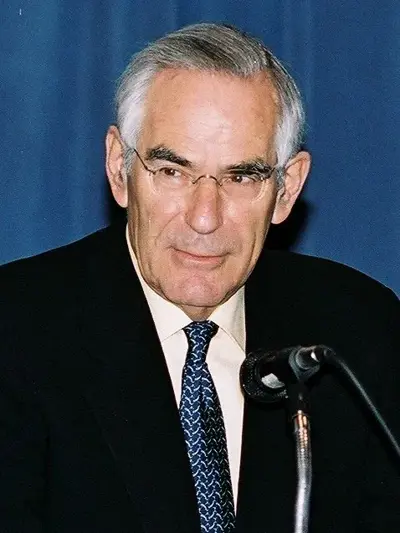
David Halberstam was an American writer, journalist, and historian, known for his work on the Vietnam War, politics, history, the Civil Rights Movement, business, media, American culture, and later, sports journalism. He won a Pulitzer Prize for International Reporting in 1964. Halberstam was killed in a car crash in 2007, while doing research for a book.
