George F. Kennan Quotes
Anyone who has ever studied the history of American diplomacy, especially military diplomacy, knows that you might start in a war with certain things on your mind as a purpose of what you are doing, but in the end, you found yourself fighting for entirely different things that you had never thought of before ... In other words, war has a momentum of its own and it carries you away from all thoughtful intentions when you get into it. Today, if we went into Iraq, like the president would like us to do, you know where you begin. You never know where you are going to end.
Kennen, one of the great American wise men for foreign affairs, could not have predicted the outcome of the Iraq war any better.
George F. Kennan, 1904-2005, Historian & U.S. Ambassador to Russia and Yugoslavia, Quoted in "George F. Kennan Speaks Out About Iraq". History News Network, September 26. 2002
Sourced by: Eigen's Political and Historical Quotations

Podharetz was citing the Vietnam war. The two American occasions where the plausibility seemed to fade were the Vietnam War and The Irag war. Both Presidents Lyndon Baines Johnson and George W. Bush as Bismarck predicted, had much political trouble over the wars.

He served Presidents Reagan, Clinton, and both Bushes


The English were at War with Napoleon and Denmark was neutral. British leaders feared that Denmark might either ally themselves with Napoleon or provide him with ships from their well equipped fleet. The English decided on a preemptive attack on Denmark and military forces were ordered to Denmark. When they arrived, they were ordered to bombard Copenhagen and force the Danes to surrender. When this happened, the British seized the Danish ships and simply took them as war prizes. The issues of the morality and wisdom of preemptive attacks, as with the Americans in the Iraq war, was thoroughly debated but the government view prevailed to the shame of most Englishmen.

President George W. Bush, to justify the invasion of Iraq had told the public that the Iraqi regime was developing nuclear weapons and other weapons of mass destruction, and had participated in the September 11 attack on the United States by assisting Al Qaeda. It turned out that these statements were false. The administration claimed that their error was well intentioned and the result of faulty intelligence. Opponents claimed that the administration officials knew that they were exaggerating and had pressured the intelligence agencies to create intelligence conclusions that supported their story.


This quotation is a good example of how tolerant some nations can be in terms of maintaining diplomatic relations and trade relations with other countries. The American and English governments chose to simply protest and condemn the slanderous statement but decided that the Prime Minister was pandering to his political local Islamic base, so took no further action and kept open diplomatic relations. Mahathir had a history of being very accusatory of the West with respect to anything that affected the Arab Muslims. The number of Muslims killed by the Americans and British in the Iraq War was very small compared to the huge number of Muslims killed by other Muslims in their Sunni Shiite civil war. While Bush and Blair both generated support for the Iraq invasion by making claims of WMD development in Iraq that were false, it is not clear whether or not they knew their statements were false, should have known that they were false, created an atmosphere against Iraq that was likely to produce false accusations, or were simple misled by poor intelligence. Mahathir, of course, chose to assume the worst case, and claim it was true, which is what many people think Bush and Blair did in analyzing the intelligence on Iraq.

3 years later he led America on a huge invasion and nation building project in Iraq. It turned out that had he listened to his own advice and not flip-flopped, the huge cost of the Iraq War might have been avoided.


Barry Goldwater in the 20th century used a variation of this quotation. See {601784}.

The three leading “hawks” of the administration and the architects of the Iraq War. However, not only had none of them ever been in combat, but none had ever served on active duty in the military. None of the three had been drafted or enlisted during the Vietnam war except for Bush who was accepted into the Texas Air National Guard; parts of his service record has been last, but he never was outside the United States. Murtha, John Kerry, John McCain and many of the administration's critics were all decorated war heroes who had been wounded in action.

The “surge” was the short term injection of a large number of American combat troops into Iraq when the Iraq War was going badly. President George W. Bush, who at the urging of Vice President Cheney and the neoconservatives had invaded Iraq and while the invasion went well the administration botched the so-called peace and America was in the midst of a Iraqi civil war. Bush went ahead with the surge despite the advice of the Joint Chiefs. What makes the quotation particularly interesting, beyond the fact that the senior military advice was ignored, was that the President had always campaigned on the principle that the President should listen to the senior American Military officials on military tactics and strategy. He like Franklin Roosevelt, Harry Truman, Dwight Eisenhower, John F. Kennedy, and other presidents found that the military leadership perspective was often very narrow and not even militarily infallible. The Iraq War turned in our favor after the surge albeit that there have been arguments since then as to whether or not the surge was the reason or was it due to other factors which occurred at the same time. Probably, all were factors.


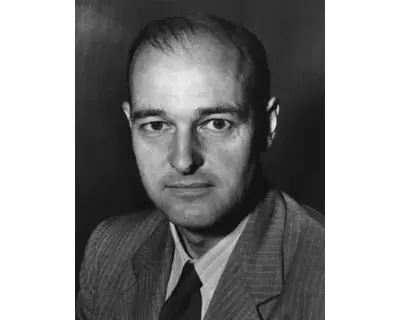
George Frost Kennan was an American diplomat and historian. He was best known as an advocate of a policy of containment of Soviet expansion during the Cold War. He lectured widely and wrote scholarly histories of the relations between the USSR and the United States. He was also one of the group of foreign policy elders known as "The Wise Men".
