Murray Rothbard Quotes
Investment bankers do much of their business underwriting government bonds, in the United States and abroad. Therefore, they have a vested interest in promoting deficits and in forcing taxpayers to redeem government debt.
Rothbard, Murray N. Wall Street, Banks, and American Foreign Policy. Center for Libertarian Studies, 1984.


Kennedy, with great Republican support proposed a reduction of the top income tax rate from 91% to 65%, reduction of the bottom rate from 20% to 14%, and a reduction in the corporate tax rate from 52% to 47%. That put the tax rates at the appropriate level. Economic growth was reasonable until President Reagan’s military spending cold war strategy produced huge deficits, Clinton raised the tax rates slightly and had the best economic growth ever, and had a balanced budget. George W. Bush lowered taxes had much slower growth and even larger deficits. However, by 2013 all hints of bipartisanship were gone. The Republicans claimed that the then tax rates were much too high—the highest income tax was half the rate that most agreed in 1962 was the right rate. And the corporate tax was 35 %, far lower than the Kennedy rate of 47% and incredibly lower when we consider that with deductions that were then in force the average corporate tax was only 12% the lowest since the Great Depression. Meanwhile the 2008 Bush Economic Meltdown and the Great Recession it produced the highest deficits in history with the lowest taxes in modern times and much of the polarized population demanding further tax cuts and an equal number demanding increased tax revenue.

There was a financial crisis in the country and the world when highly risky home mortgage loans defaulted leaving investors and speculators in mortgage-backed securities in a poor position. The investors had been reaping very high interest rates for their risky investments, but this was the first time that this form of risky investment had failed. The investors, of course were looking for a bailout from government. When the Bush administration failed to bail out investment bank, Lehman, there was a panic and the banking system of the country and much of the world froze up. Bush and his Secretary reversed their bailout of speculators policy and provided various assistants and bailouts to the very bankers and other investors who had caused the economic meltdown. The policy was continued by the Obama administration although the bailouts were just as distasteful to Obama as they were to Bush, but most economists agree that the two presidents very distasteful and unpopular bailout actions probably saved the nation from a massive depression. After being bailed out by the taxpayers, the Bankers then paid themselves exorbitant bonuses while the results of their management put 10 percent of the country out of work.


By the time the debt ceiling needs a Congressional vote, the money has already been obligated and spent. That is when Congress can control spending. The debt ceiling is ALWAYS increased by Congress when asked otherwise the U. S. would not be able to pay its bills. However, many members of Congress like the fact that every year or so the administration needs their votes so they can extract benefits for their constituents more easily with that leverage.

In 1964, after the newly elected Labour Government announced its new policies and budget, the financiers and speculators who control the international money markets thought the new budget and policies ill-advised. The made their concerns known to the Governor of the Bank of England who in turn recommended to the new Prime Minister that he cut the budget drastically and adopt a new more conservative set of economic policies. The Prime Minister was shocked that a non-elected small group of men—mostly not even British, were trying to reverse a set of policies that the voters in a democracy had elected. However, he was more shocked when he discovered that if he didn’t “obey” the financiers could act in concert, attack the British Pound, dramatically increase the interest rates the government would have to pay to borrow short term money, and ruin the British economy. Wilson had to comply. In America we refer to this situation more delicately by saying that “the markets will not react well to one proposal or another”. Our politicians intimidate themselves. The only way a democracy can really have control over its own policies and budgets, is to not be in debt to anyone.


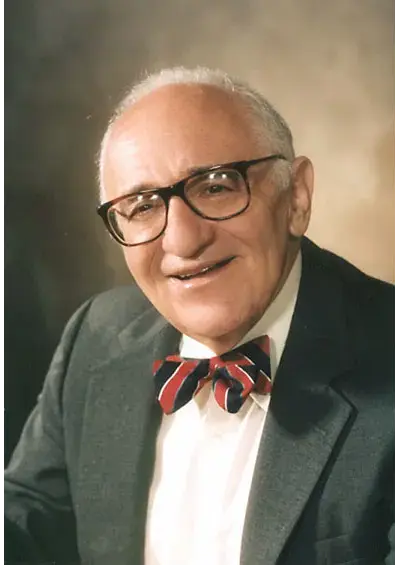
Murray Newton Rothbard was an American heterodox economist of the Austrian School, economic historian and political theorist. Rothbard was the founder and leading theoretician of anarcho-capitalism, a staunch advocate of historical revisionism and a central figure in the 20th-century American libertarian movement. He wrote over twenty books on political theory, revisionist history, economics, and other subjects.
