Mason Cooley Quotes
Innocence: I am only stepping on your face because it lies in my path.
Cooley, Mason. City Aphorisms. Pascal Press, 1984-1993.


It is surprising that these ideas would come from one of the most autocratic powerful monarch in the world at the time. However there were many very liberal influences on her from Europe. This set of proposals she even sent to Voltaire to get his feedback and criticism. As late as 2006 the American President was reluctant to outlaw torture for terroristsand the Vice President actually argued for its retention as an interrogation technique. Over 300 years earlier the autocrat of Russia argued against it.


Richelieu was commenting on the 1609 expulsion of the Moriscos from Aragon.
Roger’s Rangers of the French & Indian War were the first using unconventional warfare and invented the “deep raid” when they went in stealth all the way to Quebec and defeated the Abnaki Indians in their home village rather than defend against the Indians’ French coordinated attacks on upper York State. Rogers was portrayed by Spencer Tracy in the film Northwest Passage depicting the raid. All the men were killed but the women and children were captured and released with the exception of 5 teenagers who the Rangers took with them. This was one of the first formal “Rules of War” in what was otherwise a viciously uncivilized war.


While there were atrocities committed by both sides in the Civil War, the proportion tended to be heavily weighted by Confederate perpetrations. The Confederate officers were not appointed by the command structure and under strict military discipline, but they were elected by the troops and could be so removed (except for the general officers who were appointed by the confederacy). Also, the confederate troops were not as well fed or supplied as the North and they had fewer resources with which to fulfill their obligations to prisoners. In a number of battles, ill-clothed soldiers stripped the Union dead, wounded and prisoners, often naked to use their shoes, blankets and clothing, Union prisoners of war were much more badly abused in the prisoners of war camps like Andersonville which were not under the command of Robert E. Lee.
Sectarian fights had begun to break out two years before. These escalated in ferocity and soon there were some deaths. But this event of terror, torture and atrocity against a family that was not fighting changed the nature of the interreligious Irish conflict forever. The outraged Protestants organized and armed themselves and things came to a climax in September 1795 when there was an armed battle in which the Protestants killed 30 Catholics who were now calling themselves “Defenders”, with few losses. They then marched to Longhgall and there, in the home of James Sloan the Orange Order was founded and the two groups fought each other for the next 200 years.


Lawrence of Arabia. In the Middle East, Lawrence led a small Arab army against the Turks and the Germans. In a battle near Tafas, the captured 250 Turkish and German soldiers as prisoners. They them shot them all in cold blood with their Hotchkiss machine gun. What makes this quotation so significant is that one of the great British heroes of WWI was actually guilty of War Crimes. An American journalist gave Lawrence and his exploits great publicity without mentioning the atrocities. The British chain of command also ignored the transgression of one of the most fundamental rules of war even though the clear evidence was in basic battle report files. However, the British never removed the report from the files or destroyed it. The Turks and the Germans while they respected the rules of war with the English, French, and most allies, treated the Arabs much more harshly and murdered Arab prisoners on many occasions. In part this atrocity at Tafas was an act of vengeance and retaliation. But Lawrence never even tried to explain it.


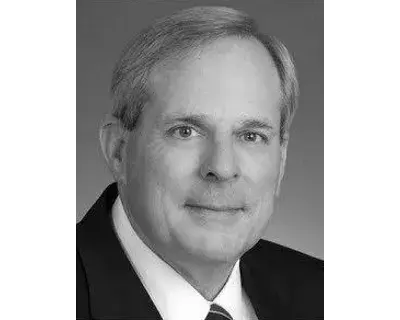
Mason Cooley was an American aphorist known for his witty aphorisms. One of these such aphorisms Cooley developed was "The time I kill is killing me." He was professor emeritus of French, speech and world literature at the College of Staten Island. He was also an assistant professor of English at Columbia University from 1959 to 1967 and an adjunct professor from 1980 to 1988. He received his B.A. from San Diego State University and his Ph.D. from Oxford.
