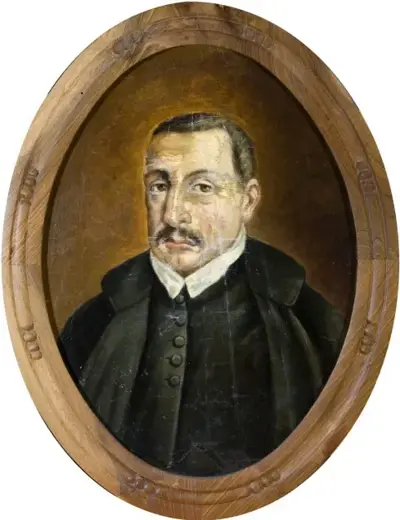
Lupercio Leonardo de Argensola Quotes
No pain equals that of an injury inflicted under the pretense of just punishment.
Lupercio Leonardo de Argensola, 1559-1613, *, Sonetos
Sourced by: Eigen's Political and Historical Quotations


Named after penal reformer Johne Howard, 1726-1790. Howard Associations have since been organized in many countries.

Attila the Hun
Barjawan was a eunuch slave. Islamic rulers typically used slaves as major governmental appointees. That way they had the unilateral power of life and death over the official which under Islamic law they did not have with a free appointee. Since fellow Muslims could not be held as slaves, most governmental officials were Christians, Jews or other non-believers. The result was that Muslims never developed a culture of administration, management and bureaucracy until very recently.

England, and most other countries of Europe, had put people who could not pay their debts in prison. When our founding fathers formed the constitution, they too saw debtors’ prison as an acceptable concept. 11 years earlier Congress had outlawed Federal Debtors’ Prisons. However many states and local governments then still had them. Smith wanted them abolished completely. What is fascinating about this quotation is that although the head of a religion, Smith was not advocating the kinds of personal lifestyle issues of his church the way modern religious leaders do, but was concerned with the much larger issues of expansionism, corruption of the courts and judiciary, and land distribution. He was a classic reform candidate in that sense. Smith had written to most of the then likely Presidential candidates of both major parties asking for their position on the Mormons who were facing persecution wherever they went. None of the politicians would make any satisfactory commitments. Smith took Direct Action and became the only major religious official to have run for the Presidency of the United States until Pat Robertson tried and failed in 2000. Smith’s assassination shortly thereafter cut his run for the Presidency short before it made much headway and politically he had no chance to affect the race.


This quotation while difficult for us to fathom today, illustrates a very conservative 18th century view of punishment and law enforcement. The South African high court was very distressed that torture was to be ended. To them, and many others throughout the so called “civilized” European cultures of the time, capital punishment was not a very good deterrent—even for slaves. The execution was usually accompanied by horrible torture and cruelty before death. Slavery was such a horrible life, and the White colonists knew it, that death could be welcome (many slaves had committed suicide). So the suffering at the execution was to serve as a further deterrent. In reality it did not, any more than capital punishment did in the 20th century, but by the logic of the culture and the times, torture was needed as well as capital punishment.


This quotation so impressed Thomas Jefferson that he wrote it in his Commonplace Book.