T. E. Lawrence Quotes
We turned our Hotchkiss on the prisoners and made and end to them.
Lawrence of Arabia. In the Middle East, Lawrence led a small Arab army against the Turks and the Germans. In a battle near Tafas, the captured 250 Turkish and German soldiers as prisoners. They them shot them all in cold blood with their Hotchkiss machine gun. What makes this quotation so significant is that one of the great British heroes of WWI was actually guilty of War Crimes. An American journalist gave Lawrence and his exploits great publicity without mentioning the atrocities. The British chain of command also ignored the transgression of one of the most fundamental rules of war even though the clear evidence was in basic battle report files. However, the British never removed the report from the files or destroyed it. The Turks and the Germans while they respected the rules of war with the English, French, and most allies, treated the Arabs much more harshly and murdered Arab prisoners on many occasions. In part this atrocity at Tafas was an act of vengeance and retaliation. But Lawrence never even tried to explain it.
Thomas Edward Lawrence, 1888-1935, English Army Officer, Official field report on the Tafas engagement, September 1918
Sourced by: Eigen's Political and Historical Quotations

While there were atrocities committed by both sides in the Civil War, the proportion tended to be heavily weighted by Confederate perpetrations. The Confederate officers were not appointed by the command structure and under strict military discipline, but they were elected by the troops and could be so removed (except for the general officers who were appointed by the confederacy). Also, the confederate troops were not as well fed or supplied as the North and they had fewer resources with which to fulfill their obligations to prisoners. In a number of battles, ill-clothed soldiers stripped the Union dead, wounded and prisoners, often naked to use their shoes, blankets and clothing, Union prisoners of war were much more badly abused in the prisoners of war camps like Andersonville which were not under the command of Robert E. Lee.

The Colonel defined people capable of bearing arms as males and females over 20 years of age. Many were slaughtered. Fortunately, most of his officers and men did not follow this order but enough did to make it one of the most disgraceful events in American military history. Smith was court marshaled and found guilty but his punishment was to be cashiered from the army. There were many atrocities committed by the minorities of both sides in this brutal war. Military and Congressional Investigations caused the army manual to be revised military policies reformed.

Clark’s men had English Colonel Hamilton under siege by making him think there were many more Americans in Clarks army than the real 180 or so. He tried to get Hamilton to surrender by threatening if they had to take the fort they would treat Hamilton and the British as murderers—Hamilton had paid hostile Indians for American scalps. At that point a party of Clark’s men arrived with 4 or 5 Indian prisoners who had been captured raiding
civilian farms. After the Indians were executed, Hamilton agreed to surrender.


Roger’s Rangers of the French & Indian War were the first using unconventional warfare and invented the “deep raid” when they went in stealth all the way to Quebec and defeated the Abnaki Indians in their home village rather than defend against the Indians’ French coordinated attacks on upper York State. Rogers was portrayed by Spencer Tracy in the film Northwest Passage depicting the raid. All the men were killed but the women and children were captured and released with the exception of 5 teenagers who the Rangers took with them. This was one of the first formal “Rules of War” in what was otherwise a viciously uncivilized war.

The German Generals talked him out of the idea, but the quotation gives an insight into the Character of the German Leader. It never occurred to him that the Russians might retaliate and murder German prisoners.

This is a description of a massacre of Protestants (mostly English) by Catholic Rebels led by Phelim O’Neill. The Catholics whose religion had been compromised when English King Henry VIII severed all ties to the Pope and the Vatican and bound the Irish to that decision of his. The Irish Catholic peasants so resented the English that their hate caused massacres like this in the Irish Rebellion of 1641. Their anger was so great that Phelim O’Neill and his officers lost control of their troops who were bent on revenge.
The U.S. was at war with Spain and Filipino insurgents for the control of the Philippines. During this war there were a few senior U. S. Officers who in later times would have been tried and jailed for war crimes. The men under them were brutal and committed atrocities at their orders. See {615368}.
The treaty was for the surrender of the city of Acre. King Richard led all the Christian Crusaders. He has always had a good reputation in the West, and most people—especially the English would be surprised to learn that in order to speed up compliance with a treaty he ordered this atrocity. Christian historians corroborate the slaughter.

This statement caused great consternation. NcNutt did try to explain that he was speaking personally and not for the Government, but there was a small proportion of America who had concluded that all Japanese should be killed. Such an concept which was unthinkable 5 years earlier was considered as a result of several factors: The Japanese had murdered many American prisoners of war. Killed millions of civilians throughout Asia including doing medical and weapons experiments on live human beings. They had practiced torture, compulsory prostitution and mass rape of conquered territories. At the same time, the Germans had tried to exterminate all the Jews and, with some Japanese help, did kill two-thirds. The concept of genocide had been introduced to Americans as the concentration camps were liberated. And American casualties in the Pacific had been heavy. Vengeance was desired by many. Fortunately, the overwhelming majority of Americans never considered genocide seriously.
The Philippine-American War was terribly brutal. In response to insurgent atrocities against American soldiers, some of the Americans also adopted brutal tactics including torture and mutilation. Washington had heard stories of this improper behavior in the part of some American troops and instructed the senior officers to investigate and discipline the men if the reports were true. Unfortunately some of the senior officers covered up the illegal and criminal behavior of some Americans. This quotation was taken from a New York Times report on a representative of the Red Cross who went to the Philippines at the invitation of the insurgents. He generally found serious atrocities by some of the soldiers on both sides but by no means all of the combatants. General Otis, the U. S. Commander tried to keep Blake out, and had him detained away from the battle areas for some weeks where he was “educated” about the enemy atrocities. Finally Blake got to the field and reached the insurgent commander who had invited him. His report generally praised the American troops, but spared no details when there were guilty of atrocities.

Cromwell’s army of Parliament massacred all the town’s defender. Cromwell had issued an ultimatum to the town commander which had been refused. See {632367}.
Referring to the behavior of English King Edward I, 1239-1307, towards Scotland:

The soldiers obeyed their orders and killed every man, woman and child they could find outside the city. They beheaded captured prisoners, bayoneted pregnant women and children. All civilian houses were burned, often with the people trapped inside.

Saloth Sar Pol Pot. He was responsible for the brutal killing of over 1 million of his own people.


Japanese military culture of the time was that a soldier who surrendered, even if wounded, was totally dishonorable and therefore could be abused and killed. The American marines then retaliated, and after that, the Americans also took no live prisoners contrary to American military regulations. This incident shows how difficult it is to maintain military professional standards and regulations if the other side does not. Similar situations existed in most American wars, but by the end of the 20th century, the all volunteer military had become much more professionalized and disciplined, and there were relatively few American atrocities despite many provocations.
Yuliy Osipovich Martov. Criticism of the Bolshevik behavior in dealing with counter-revolutionaries in the civil war that followed the Russian Revolution. This despite the fact that the death penalty had been abolished right after the Revolution. See {590510}


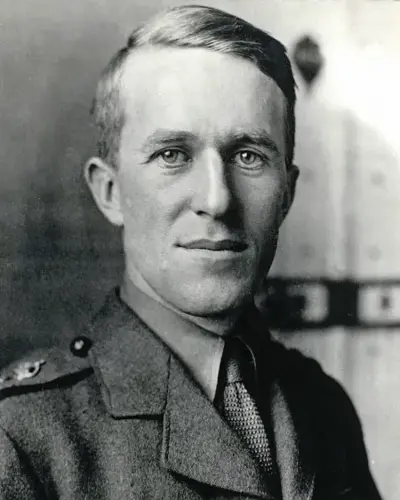
Colonel Thomas Edward Lawrence CB DSO was a British archaeologist, army officer, diplomat, and writer who became renowned for his role in the Arab Revolt (1916–1918) and the Sinai and Palestine Campaign (1915–1918) against the Ottoman Empire during the First World War. The breadth and variety of his activities and associations, and his ability to describe them vividly in writing, earned him international fame as Lawrence of Arabia, a title used for the 1962 film based on his wartime activities.
