Michael Lewis Quotes
Incredibly, at this critical juncture in financial history, after which so much changed so quickly, the only constraint in the subprime mortgage market was a shortage of people willing to bet against it.
Lewis, Michael. The Big Short: Inside the Doomsday Machine. W. W. Norton & Company, 2010.


This quotation has more than historical interest. The housing fraud technique of 1906 that Sinclair uncovered in his expose were essentially very similar to those that were used in the beginning of the 21st century on a much larger scale that contributed to the Meltdown of 2008, the Great Recession, and the weak housing industry for the next decade. The major difference is that by 2008, the banks and finance industry had developed ways to also get money from the taxpayer for the housing frauds. The expectation that the home buyer would not be able to keep making the mortgage payments was the key in both centuries.

She had warned about the unregulated derivatives 10 years earlier, but to no avail. See {637987}. Then when she had been proven prescient in the Meltdown of 2008, Congress was more interested in how she thought they could prevent future problems with derivatives. Some were adopted but not all. The financial institutions claimed that they needed derivatives to hedge positions and hence “stabilize” the system. Of the members of Congress who voted on this issue, almost none understood derivatives and credit default swaps were and how they worked. But some were sure they were bad, and others were sure that they were necessary for stability. Derivatives can, and did, get so complicated that the people who originally created them sometimes cannot tell whether they are at risk or not. Even computer cannot calculate the value and risks of these instruments because the values and risks depend on what happens to other companies or instruments which themselves have derivatives insuring them. See {620038} for a good description of the difficulty.


Credit default swaps were in large part responsible for the melt down of the economy of 2008 and the Great Recession thereafter. A credit default swap was one of the favorite derivatives that became popular. Is an insurance policy that a company will pay off its bonds and not go bankrupt. It is a cross between an insurance mechanism and a stock exchange type security mechanism, and through heavy lobbying, escaped any kind of regulation. It cost a company no money to write a credit default swap, and they were paid to do so. As long as business and the economy was good, it was a terrific business but there was no way of ever knowing how much risk they were taking. So companies who wrote credit default swaps did not have to have the money to pay to back them up. When that happened in 2008, even the largest insurance company in the world collapsed because of the risk of having to pay the credit default swap and the U. S. Government had to take over the insurance company. In 2010, the Obama administration passed a financial reform bill that began to regulate credit default swaps. Buffet, the American who had made the most money in financial securities, realized the great danger not only to the company, but to the entire national economy. Most of the rest of the financial institutions, could make large amounts of money without have to have much capital as long as things went well. So credit default swaps began to exceed the other financial instruments in activity. Neither the Federal Reserve or the other government regulatory agencies chose to regulate these risky instruments nor even to require that they be publicly disclosed -- See {637987}, {637986} and {637992}.

Unmindful of the steady economic prosperity during the 1920s in America, Comintern “assured” American Communists that the economic growth was about to make an abrupt U-turn.

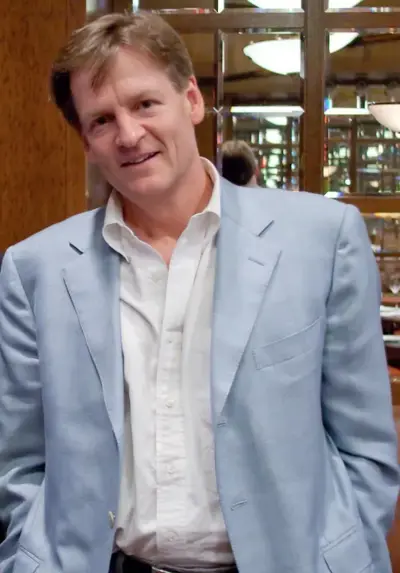
Michael Monroe Lewis is an American author and financial journalist. He has also been a contributing editor to Vanity Fair since 2009, writing mostly on business, finance, and economics. He is known for his non-fiction work, particularly his coverage of financial crises and behavioral finance.
