Richard Nixon Quotes
In the television age, the key distinction is between the candidate who can speak poetry and the one who can only speak prose.


Ronald Reagan’s media expert, Michael Deaver, developed a new approach to Presidential appearances. He realized that if the President made a 5 or 10 minute speech at an event, the Evening News would choose one or two 10-15 second excerpts, and that was what the vast majority of the country would see. Therefore, he reasoned, the words spoken meant relatively little. It was the image what would last in people’s memory. Therefore, he worked hard to concentrate on getting the right background for the President’s appearance. The Statue of Liberty, a naval ship, a factory at work. The set of images that people would have of the President in these different appearances would define the President in the minds of most people. Deaver would be more concerned that the TV camera’s showed the background scene he had planned (rather than a strange angle or just a close-up of the President’s face) than he would be about which words—sound bytes—the TV station would select. Hence Baker’s observation that words were less important than the TV images.
Dr. Sovern played Ronald Regan in the debate preparation of Walter Mondale

He was a speechwriter for Adlai Stevenson who wrote many of his own speeches but so many are required a modern president and candidate must have speechwriters.
The Democrat campaign operators, led by Robert Woolley, for the first time in an American Presidential campaign, used all the new techniques of public relations and advertising that had been developed. Many observers like the New Republic editors saw this in a negative light for American democracy. They wanted the old method where people met the candidates and had discussions with candidates or heard from others who had. It was in retrospect an editorial of nostalgia, as the country was growing so much that voter “acquaintance” with Presidential candidates was becoming more and more difficult.


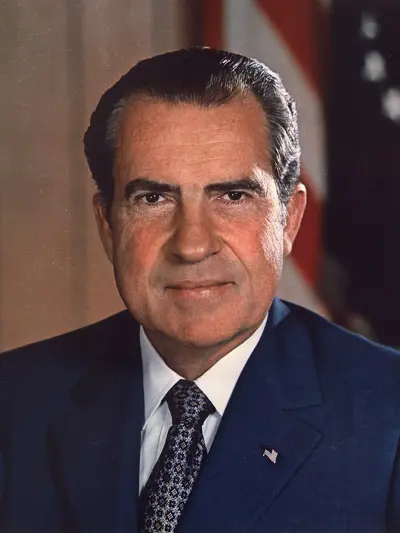
Richard Milhous Nixon was the 37th president of the United States, serving from 1969 to 1974. A member of the Republican Party, Nixon previously served as the 36th vice president from 1953 to 1961, having risen to national prominence as a representative and senator from California. After five years in the White House that saw the conclusion to the U.S. involvement in the Vietnam War, détente with the Soviet Union and China, and the establishment of the Environmental Protection Agency, he became the only president to resign from the office, following the Watergate scandal.
