Bill Gates Quotes
In the same way that when the car got going, people thought it would be an electric car, people thought it would be a steam car. Actually, the dark horse in that race was internal combustion, but because of the energy density of gasoline and discovery of oil in large amounts at that point in first Pennsylvania and then Texas, it won out over those other two, to the point that those other two are actually viewed as obscure footnotes in history.
Gates, Bill. "We Need an Energy Miracle." Interview by James Bennet. The Atlantic, Nov. 2015.


What Mises says in this quotation is true. What he does not say that by the time the automobile was developed and then the airplane, the Railroad monopoly had impeded and destroyed so many different entities that the governments had cracked down and curtailed much of the ability of the Railroads to exercise monopolist power. If the Railroads had as much power in 1920 as they did in 1870, there probably never would have been a thriving auto industry and the airlines would likely never have succeeded. Mises again exaggerates a basic point that large monopolistic companies and industries often have not been able to stave off new technology and approaches. While true in many cases, the cause is not necessarily fundamental to economics but has sometimes (as with the railroads) been caused by Government regulation and reform. A better example is that the large sail dominated shipping industry was not able to stop the coal fired steam engine ships. Indeed the shipping owners embraced the new technology. The best examples of Mises point occurred after Mises died. For example, Microsoft was not able to prevent Google from dominating many of Microsoft’s positions in the IT world.

See {635006} for a slightly earlier French solar engine. Much of the most effective uses of Solar power uses the concentrated heat of the sun to heat water or some other substance like this device. The vast majority of the hot water heaters in Israel function on this principle—no electricity or any other fossil fuel. The only reason that the solar engines of the time were more costly where fuel was available is that no one realized the huge environmental consequence of the fossil fuels. Today we do realize that but do not charge the oil and gas companies and consumers to cover the costs of fixing what we know about and are able to remedy. Solar powered equipment is not a modern invention however and has been with us for well over a century. Paul Collins wrote “He calculated that solar power cost about ten times as much as coal, so that until coal began to run out, solar power would not be economically feasible. But this, to him, was not a sign of failure—there was no question that fossil fuels would indeed run out someday. The great engineer maintained an unshakeable belief in the future of solar power to his last breath; he had set up a large engine in his backyard and was still perfecting it when he collapsed in early 1889. Though his doctor made him rest, Ericsson could not sleep at night: he complained that he could not stop thinking about his work yet to be done.” The only reason that the solar engines of the time were more costly where fuel was available is that no one realized the huge environmental consequence of the fossil fuels. Today we do realize that, but do not charge the oil and gas companies and therefore consumers cover the costs of fixing what we know about and are able to remedy. Solar powered equipment is not a modern invention however and has been with us for well over a century.


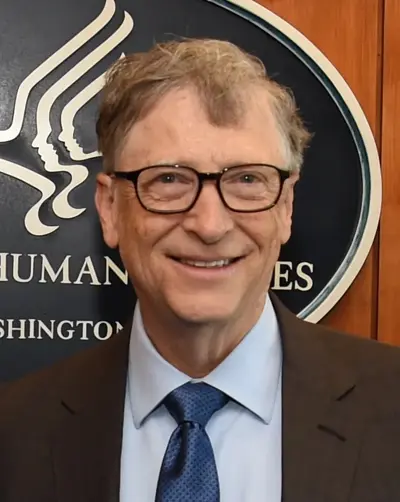
William Henry Gates III is an American business magnate, software developer, investor, author, and philanthropist. He is a co-founder of Microsoft Corporation. During his career at Microsoft, Gates held the positions of chairman, chief executive officer (CEO), president and chief software architect, while also being the largest individual shareholder until May 2014. He is considered one of the best known entrepreneurs of the microcomputer revolution of the 1970s and 1980s. Gates is also co-founder and chairman of TerraPower that is developing next generation traveling-wave reactor nuclear power plants, in an effort to tackle climate change.
