Sun Tzu Quotes
In the practical art of war, the best thing of all is to take the enemy's country whole and intact; to shatter and destroy it is not so good.
Sun Tzu. The Art of War. Translated by Lionel Giles, Luzac & Co., 1910, p. 17.

One of the very poorly executed military maneuvers of the American Revolution was the failed patriot attempt to invade Canada and take Quebec. The Generals assigned to lead the invasion made a host of blunders. When things were not going well, they asked for Benedict Arnold to come and reinforce them. However, they asked for help too late as Arnold explained to George Washington. The reason they wanted Arnold was that at the early part of the American Revolution he was one of the two best field commanders the Patriots had. Soon after, he led the successful battle of Saratoga, but his Commander did not give him any informal or official credit. Arnold felt that he was not properly recognized for his many military achievements and that appears to be true. However, with that mental predisposition, he gave in to venal motives and went over to the British side—the only senior officer who committed treason in the Revolution.


The phrase “put them under contribution” was a practice of making a town pay for the costs of the British military effort in the area. To some, this was blackmail and extortion, pay cash or get destroyed. The Prime Minister thought that the American public sentiment at the time would not be intimidated to pay in a significant number of towns or cities.
At the time he was commenting on the War in Afghanistan.

He was a realist who foresaw that even though the South had been militarily defeated, there were those who would persist in their efforts to retain slavery or a de facto form where freedom is the form but subjugation was the substance. It would be Jim Crowe and terrorism in the form of the KKK and a successor to Lincoln who was very sympathetic to the aims and culture of the Southern Rebels.

This issue of who has the wisdom and competency to determine policy in matters of war has been a constant one in most societies. Even in the Iraq war of the early 21st century, the Congress and the President argued as to what competence the Congress had to determine policy, strategy and tactics.


During his revolutionary battles in Kaingsi, Mao reduced his theory of guerrilla tactics to a poem:

Referring to Lincoln's Secretary of War, Edwin M. Stanton, who was a forceful administrator constantly telling all others what to do:


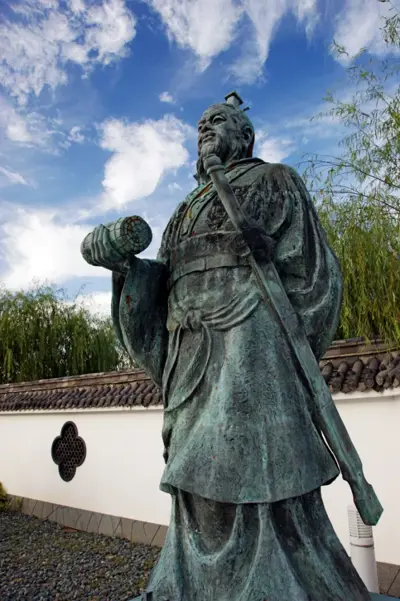
Sun Tzu was a Chinese general, military strategist, writer, and philosopher who lived in the Eastern Zhou period of ancient China. Sun Tzu is traditionally credited as the author of The Art of War, an influential work of military strategy that has affected both Western and East Asian philosophy and military thinking. His works focus much more on alternatives to battle, such as stratagem, delay, the use of spies and alternatives to war itself, the making and keeping of alliances, the uses of deceit, and a willingness to submit, at least temporarily, to more powerful foes. Sun Tzu is revered in Chinese and East Asian culture as a legendary historical and military figure. His birth name was Sun Wu and he was known outside of his family by his courtesy name Changqing. The name Sun Tzu by which he is best known in the Western World is an honorific which means "Master Sun".
